
Donner Amp Attenuator Pedal
4.3Editor score
True bypass signal path
Minimum footswitch for mute
Simple onboard level control
Discover the top attenuator for tube amp options to lower volume while preserving tone. This guide compares ten models for features, reliability, and sound
Tube amplifiers deliver rich tones but often require loud volumes to reach their sweet spot. An attenuator for tube amp solves this by allowing you to crank the gain while keeping the output level manageable for home or studio use.
We evaluated ten top models based on power handling, impedance matching, tone preservation, and build quality. Each unit was compared for its ability to maintain dynamic response and frequency integrity when reducing signal strength sent to speakers or recording interfaces.
Every pick below highlights specific strengths such as reactive load accuracy, integrated DI options, or compact form factors. Note that availability and specific pricing can shift over time, so always verify current listings before making your final purchase decision.
4.3Editor score

4.5Editor score

4.4Editor score
The following table provides a side-by-side overview of ten leading attenuators for tube amplifiers. Each entry lists key technical specifications to help you match the unit to your amplifier wattage and impedance requirements.




The Two Notes Torpedo Captor stands out as a top pick for musicians seeking a reliable attenuator for tube amp setups. With a 4.5 rating from users, it delivers consistent performance while keeping your tone intact at lower volumes.
We may earn a commission when you buy through this link, at no additional cost to you.
Its reactive loadbox design ensures that your amplifier sees the correct impedance, preventing tone suck common with resistive units. The direct box output allows you to go straight to a mixer or interface without needing a speaker cabinet.
Trade-offs include the lack of built-in cabinet simulation, meaning you may need separate impulse response software for recording. However, this keeps the price accessible and gives you full control over your final sound chain.
Buy this if you want a robust loadbox that handles attenuation well and offers recording flexibility. It is ideal for home studio players who need to blend live feel with silent recording capabilities.
The integrated direct box lets you capture your tone without miking a cabinet.
Matches speaker impedance to preserve natural amp dynamics at lower volumes.
We may earn a commission when you buy through this link, at no additional cost to you.
This passive attenuator for tube amp is built to handle up to 100 watts, making it suitable for a wide range of amplifiers. Users appreciate its straightforward design that requires no power supply or extra cabling.
We may earn a commission when you buy through this link, at no additional cost to you.
The multi-impedance input connectors allow you to match virtually any amp from 4 to 16 ohms easily. Additionally, the emulated mic output provides a quick way to send a signal to a mixer without miking a speaker.
While the mic output is convenient, it may not capture the full nuance of a real cabinet. This is acceptable for monitoring or practice but not for critical studio tracking where realism is paramount.
It is a great choice for gigging musicians who need durability and versatility. If you want a no fuss unit that lowers volume without adding electronics to your signal path, this is a solid bet.
Supports up to 100 watts so it works with powerful tube heads.
Connectors for 4 8 and 16 ohms cover most common amp outputs.
We may earn a commission when you buy through this link, at no additional cost to you.
The Universal Audio Ox Amp Top Box represents the pinnacle of attenuator for tube amp technology. It combines a premium analog reactive load box with advanced digital modeling to deliver album ready tones instantly.
We may earn a commission when you buy through this link, at no additional cost to you.
Its dynamic speaker modeling emulates speaker drive and cone cry realistically. The front panel RIG control lets you adjust virtual mic placement without needing to set up microphones in your room.
The cost is significant compared to basic units, but the features justify it for professionals. If you need to capture specific tones quickly, this unit removes the need for a dedicated recording space.
Choose this if you want the best tone and convenience available today. It is perfect for studio engineers or home recordists who demand high fidelity and flexibility in their signal chain.
Emulates cone cry and breakup for lifelike speaker performance.
Adjust mic positions via panel to craft perfect tones instantly.
We may earn a commission when you buy through this link, at no additional cost to you.
This command center from Boss is designed for high power tube amplifiers up to 150 watts. It uses advanced variable reactive load circuitry to match your amp perfectly, retaining natural tone and dynamics.
We may earn a commission when you buy through this link, at no additional cost to you.
Users can store ten recallable rig settings to save favorite setups. This means you can switch between different amps or preferences instantly during a performance or recording session.
The built in power amp allows you to drive speakers even when attenuation is active, keeping tone natural. However, the unit is quite large and requires a power connection which may not suit all pedalboards.
Buy this if you play high wattage gear and need reliable impedance matching. It is best for stage players who want consistent tone control across multiple rig configurations.
Discrete analog components support up to 150 watts accurately.
Store ten rig setups for quick changes during live use.
We may earn a commission when you buy through this link, at no additional cost to you.
The Ironman II offers a precision compensated reactive attenuator for tube amp setups. It features analog cabinet simulation and dual impedance controls to ensure your amp responds naturally even at low volumes.
We may earn a commission when you buy through this link, at no additional cost to you.
The presence switch allows you to tweak high end response to match your room acoustics. A bypass mode ensures you can switch between attenuated and full power seamlessly during use.
While expensive, the build quality and tone retention are excellent. The analog simulation avoids digital artifacts that some units introduce, keeping the signal warm and organic.
This unit is a great fit for serious players who prioritize tone accuracy. If you need a reliable load that preserves your amp character across different frequencies, consider this option.
Uses analog circuits to mimic cab response without digital color.
Adjust high end response to suit your room acoustics better.
We may earn a commission when you buy through this link, at no additional cost to you.
This signal converter runs through the effects loop to control the signal sent to the power section. It allows you to push the front end for tone while keeping the volume down at home.
We may earn a commission when you buy through this link, at no additional cost to you.
The passive design means it does not require any power supply. Its compact footprint lets you mount it underneath your pedalboard easily without cluttering your setup.
One trade-off is that you need an effects loop on your amp. If your amp does not have one, this unit will not work effectively for attenuation purposes.
Choose this if you want a simple solution for low volume practice. It is perfect for players who already have a loop and want to retain natural tone without extra boxes.
Tames loud amps by controlling signal after the preamp section.
Compact sturdy design allows it to fit under most boards.
We may earn a commission when you buy through this link, at no additional cost to you.
A smaller version of the Ironman, this unit is a passive 30 watt attenuator ideal for lower power amps. It maintains the reactive characteristics that preserve tone and feel at lower volumes.
We may earn a commission when you buy through this link, at no additional cost to you.
The footswitchable boost allows you to add extra drive or presence on demand. The line output provides a direct signal for recording or connecting to another PA system.
Since it is rated for only 30 watts, it is not suitable for powerful heads. This limits its use to smaller combo amps or lower power tube sets.
Buy this if you use a low wattage amp and need a compact unit. It is ideal for players who want reactive feel without taking up much space in their rig.
Adds extra punch to your tone with a simple tap.
Provides a direct signal for easy recording or monitoring.
We may earn a commission when you buy through this link, at no additional cost to you.
This pedal offers a cost effective way to attenuate signal sent to the power section. High quality electronic components keep your tone clear and pure while allowing you to control output levels precisely.
We may earn a commission when you buy through this link, at no additional cost to you.
The minimum footswitch lets you set output level to a minimum immediately with a tap. This provides flexible sound character without needing to adjust knobs manually during play.
A downside is the need for a DC 9V power supply not included. Also, the build materials are less rugged than premium units which may not withstand heavy touring.
It is the best choice for home players on a budget. If you want a simple attenuator for tube amp that keeps tone clear without breaking the bank, this fits well.
Tap to mute or lower volume instantly without changing settings.
Onboard knobs let you shape output tone for different needs.
We may earn a commission when you buy through this link, at no additional cost to you.
This analog studio routing hub features a silent 50 watt power soak to absorb signal load. It is designed for independent preamp reamp signal paths and variable impedance control.
We may earn a commission when you buy through this link, at no additional cost to you.
The ability to tweak impedance allows you to change the interaction between your amp and load. This is useful for studio experiments where tone variations are desired without changing cabinets.
Since it is a routing hub, it may be less intuitive for simple live use. Also, the 50 watt limit restricts it to lower powered tube amplifiers only.
Choose this for studio environments where flexibility is key. It is ideal for engineers who need multiple paths and variable impedance to craft unique tones.
Adjust impedance to change tone interaction without swapping gear.
Independent preamp paths allow for complex reamping scenarios.
We may earn a commission when you buy through this link, at no additional cost to you.
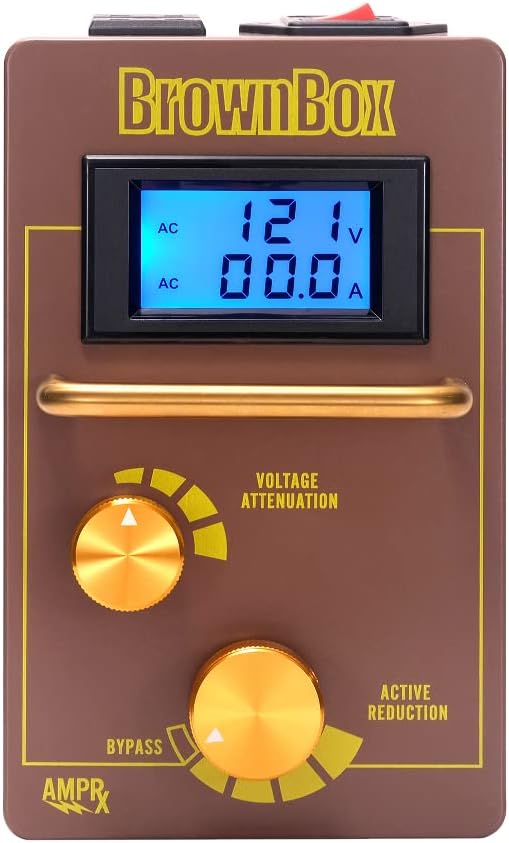
This unit is unique as it attenuates input AC voltage for full sized tube amplifiers. It features selectable input and output voltages to lower the power reaching your amp.
We may earn a commission when you buy through this link, at no additional cost to you.
The built in LCD voltmeter allows you to monitor the voltage accurately. This helps ensure your amp is receiving exactly the voltage you intend for tone shaping.
Lowering AC voltage reduces headroom as well as volume. This may not be ideal if you want full power capability at lower volumes but can be useful for specific sounds.
Buy this if you need to control AC input precisely. It is suitable for players who want to lower voltage for a specific vintage feel.
Select output voltages to change power supply reaching your amp.
Monitor voltage levels easily with a clear built in meter.
We may earn a commission when you buy through this link, at no additional cost to you.
Choosing the right attenuator for tube amp involves considering wattage, impedance, and desired features. Below are key factors to evaluate before purchasing.
Ensure the unit can handle the maximum wattage of your amplifier. Selecting one with sufficient headroom prevents damage and ensures consistent performance during long sessions.
Reactive loads better match the impedance curve of speakers, preserving tone. Resistive units are simpler but may affect frequency response or dynamic feel negatively.
Look for units with multiple impedance settings such as 4, 8, or 16 ohms. This ensures compatibility with different speakers and amplifiers in your collection.
Some models offer line outputs, mic emulations, or DI options. These features simplify recording and eliminate the need for external preamps or interfaces.
Decide whether you need a pedal or rack unit. Compact designs save space but may limit wattage handling while robust build ensures durability for live use.
Consider if footswitches or rotary controls suit your style. Some units offer advanced control via MIDI or external interfaces for preset recall.
Determine how much you can spend. Premium units offer more features but basic models can suffice if you only need simple attenuation without extra effects.
Verify that the attenuator works with your specific amp type. Some units require direct speaker output while others integrate via effects loops.
Check impedance settings regularly to match your speaker cabinet. Incorrect matching can lead to tone loss or potential damage to your equipment.
An attenuator for tube amp allows you to play your amplifier at its sweet spot without excessive volume. It reduces the signal sent to speakers while preserving tone.
Not necessarily. Some attenuators include load boxes or DI outputs. If you record silently, you may need a load box integrated or separate.
Check your speaker cabinet impedance and select the matching setting on the attenuator. Mismatched impedance can cause tone issues or stress the amp.
Quality units preserve tone but cheaper ones may alter frequency response. Look for reactive models that maintain dynamic feel accurately.
Most work with tube amps but wattage limits apply. Ensure your amplifier power does not exceed the attenuator capacity.
A minimum footswitch lets you mute or set volume to lowest instantly. It is useful for quick silencing between tracks or songs.
Always verify current stock before buying to ensure you get the right model. Prices and availability may change so checking the latest listings is advised.