
Mcbazel 3 in 1 Handheld Digital Anemometer
4.5Editor score
Beaufort scale display
Temperature sensing
Compact portable design
This guide compares the top ten marine anemometers for sailors including handheld models and integrated systems to help you choose the best wind sensor for
Marine anemometers are essential tools for sailors who need accurate wind data to navigate safely and efficiently. Whether you are racing a dinghy or cruising a yacht, understanding wind speed and direction can make the difference between a smooth sail and a dangerous situation.
We have evaluated ten distinct products ranging from affordable handheld units to professional-grade integrated systems. Our comparison considers accuracy, durability, ease of use, and specific features that matter most in marine environments like salt resistance and mounting options.
Each pick in this list highlights unique strengths for different types of boaters and budgets. Please note that pricing and availability can change frequently so we recommend checking the current details before making your final purchase decision for your boat.
4.5Editor score

4.5Editor score

4.4Editor score
This side by side comparison outlines the core specifications and intended uses for each of the ten marine anemometers reviewed in this guide to help you find the right fit.


The BTMETER BT-100 is a versatile handheld unit that serves sailors and drone pilots alike with reliable wind data. It holds a strong rating due to its multifunctional design and ability to measure wind speed in five different units including knots which is vital for marine navigation.
We may earn a commission when you buy through this link, at no additional cost to you.
Its standout quality lies in the dual temperature sensors and eight vanes that allow it to detect very low air flows accurately. This sensitivity is useful for checking ventilation or subtle wind shifts on deck. The device also calculates wind chill and provides a bright backlit LCD screen for night use.
One trade-off is that it relies on manual operation and batteries rather than a permanent boat system. However this is acceptable for a portable tool that needs to be carried in a pocket or bag. The included tripod hole allows for hands free use during photography or extended measurements.
This model is ideal for recreational sailors who want an affordable yet precise tool without installing permanent electronics. It balances performance and price effectively making it a top recommendation for those seeking a reliable handheld marine anemometer for general use.
The sensitive eight vane design ensures you catch even slight breezes that could affect your sailing angle or drone stability.
The threaded tripod hole on the bottom lets you secure the device on a pole or tripod for continuous monitoring without holding it.
We may earn a commission when you buy through this link, at no additional cost to you.
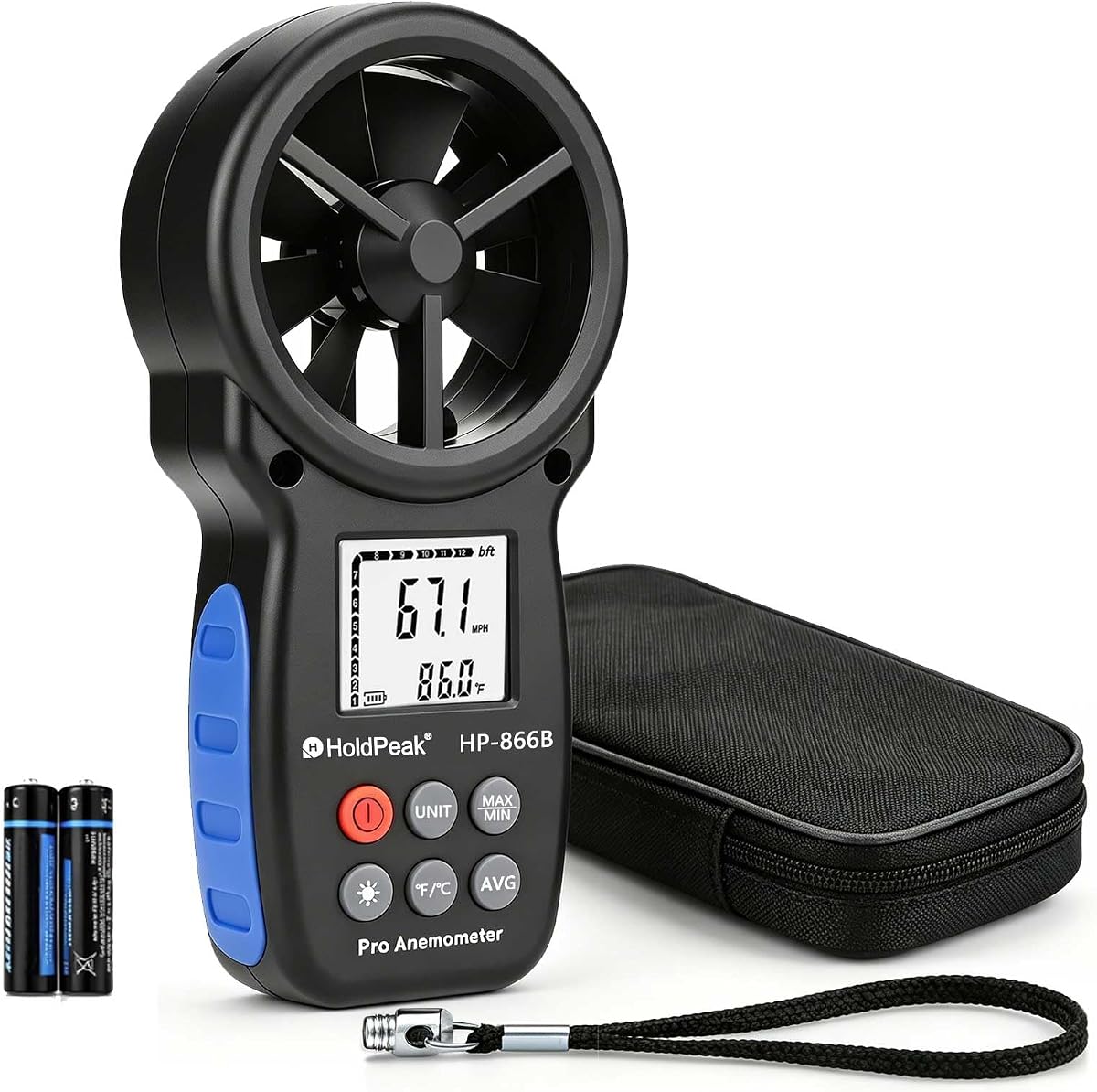
The HoldPeak 866B offers a robust build quality that appeals to users who need durability in outdoor marine environments. It shares similar measurement ranges with the BTMETER but adds a dedicated carrying pouch and hand strap for better protection during transport and use on a boat.
We may earn a commission when you buy through this link, at no additional cost to you.
This device excels in providing statistical data through Max Min and Average wind speed functions which are helpful for analyzing wind patterns over time. The smooth fan shaft contributes to consistent readings and the bright backlight ensures you can read values in low light conditions on deck.
While it lacks a dedicated wind chill calculation found in some competitors it still provides accurate temperature readings. The added weight from the sturdy housing and pouch might be a minor drawback for ultralight packs but it ensures the device survives drops on a deck.
Choose this if you want a reliable handheld meter that comes ready for outdoor adventures with protective accessories. It is well suited for sailors who value durability and statistical tracking over ultra compact size or specific wind chill metrics.
Max Min and Average modes help you understand wind gusts and lulls which is critical for timing sails or maneuvers.
The waterproof carrying pouch and hand strap ensure your device stays safe and secure when you move around the boat actively.
We may earn a commission when you buy through this link, at no additional cost to you.
This Inspeed model stands out due to its magnetic mount which offers a unique way to position an anemometer without drilling holes. It has a high rating suggesting users trust its performance and calibrated sensor for consistent and reliable wind measurements on various surfaces.
We may earn a commission when you buy through this link, at no additional cost to you.
The magnetic feature is particularly useful for temporary setups or for those who want to move the sensor around to find the cleanest wind data. Calibration ensures that the readings remain trustworthy over time which is essential for serious sailing or research applications.
However there is less public detail available about its specific functions compared to standard handheld units. The higher price point also suggests it is a niche product for specific needs rather than a general purpose tool for casual sailors.
Consider this option if you need a sensor that can be easily moved and securely attached to metal parts of your vessel. It is best for users who prioritize calibration and mounting flexibility over a full suite of display features.
The magnetic mount allows you to place the unit on railings or masts temporarily to check wind at different heights easily.
Being calibrated means you can trust the numbers it gives you without needing frequent recalibration for your sailing activities.
We may earn a commission when you buy through this link, at no additional cost to you.
The Raymarine I60 Display is part of a professional marine instrument suite designed to integrate with boat wiring and transducers. It provides a focused display for wind data but functions only as a screen meaning you must purchase the masthead unit separately to get any readings.
We may earn a commission when you buy through this link, at no additional cost to you.
Its black and grey finish is designed to match typical marine instrument panels on boats. This unit is built to withstand harsh sea environments but the rating suggests some users may find it lacking in features or compatibility compared to newer models.
The main trade-off is the cost of the system since you need both the display and the transducer to make it functional. It is suitable for boat owners upgrading their instrumentation who need a reliable display unit that matches existing systems.
Opt for this if you are building a complete instrument system and need a display that integrates seamlessly with other marine electronics. It is not a standalone handheld tool but a component for a larger installed network on your vessel.
This display works with Raymarine transducers to form a complete wind monitoring system within your boat dashboard.
The black and grey color scheme matches standard marine instruments making it a visually consistent choice for your console.
We may earn a commission when you buy through this link, at no additional cost to you.
The TopTes TS-301 is designed with a large 2.26-inch backlight LCD screen that makes reading wind data effortless even from a distance. It also measures humidity which adds extra environmental context that can be valuable for sailors planning their trips based on comfort.
We may earn a commission when you buy through this link, at no additional cost to you.
Its six measuring units cover most needs for marine and outdoor use allowing quick switches between knots mph and meters per second. The auto power off feature helps preserve battery life when the device is left on accidentally during a day of sailing.
A minor delay in sensor adjustment after changing environments is noted which means you may need to wait 30 minutes for full accuracy when entering a new climate. This is a common trait in sensor devices and is generally acceptable for most sailing scenarios.
Choose this if you value screen size and humidity data in your wind measurements. It is an excellent choice for users who want clear readings and extra comfort data without spending too much on high end equipment.
The big screen means you can check wind speed quickly without squinting or holding the device close to your face.
Measuring humidity helps you understand overall air moisture which can impact sail performance and personal comfort on board.
We may earn a commission when you buy through this link, at no additional cost to you.
This product is a replacement kit for older Raymarine ST series instruments that need new wind sensing bowls. It includes the vane counterweight and fixing screws to restore the functionality of existing marine wind systems that have worn out over time.
We may earn a commission when you buy through this link, at no additional cost to you.
The kit is essential for boat owners who want to keep their older instrumentation running without buying a full new system. It ensures that the wind speed measurement returns to factory accuracy which is critical for safe navigation and racing.
While it does not offer new features like digital displays or Bluetooth it provides the mechanical integrity needed for reliable data. The trade-off is that it requires some technical skill to install and is not a standalone device for casual use.
Purchase this if you are maintaining an older Raymarine wind system and need to replace damaged parts. It is a practical solution for extending the life of your current marine instruments without a major overhaul.
Replacing worn bowls restores your system to working condition so you can continue using your existing boat instruments.
The kit includes screws and allen keys so you have everything needed to reinstall the components correctly on your mast.
We may earn a commission when you buy through this link, at no additional cost to you.
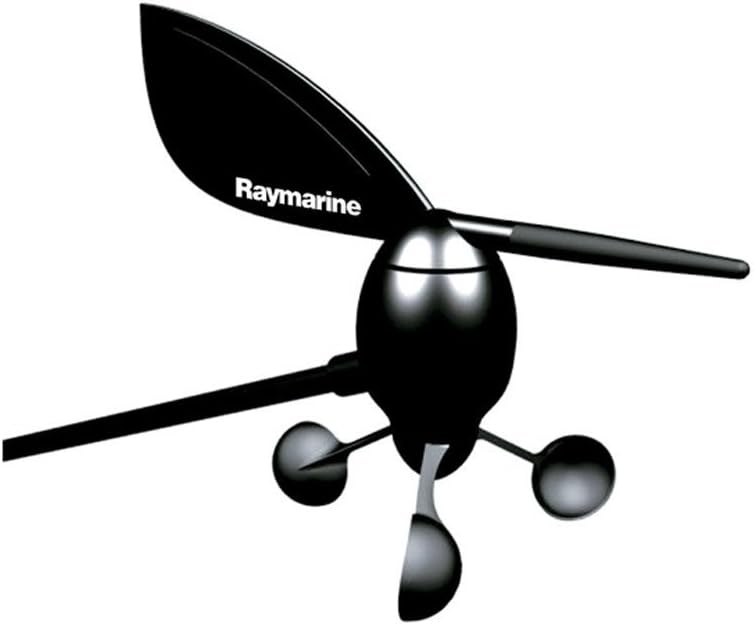
This is a dedicated masthead transducer designed to capture true wind data at the highest point of your vessel. It is the latest version from Raymarine ensuring improved durability and signal accuracy for boats with integrated instrument systems.
We may earn a commission when you buy through this link, at no additional cost to you.
The wind arm and cups are built to withstand harsh marine conditions while maintaining precision. Installing this at the masthead ensures you get the cleanest wind data available on the boat away from turbulence caused by sails or the deck.
It requires professional installation and connection to a display unit so it is not a plug and play solution for casual users. The trade-off is the complexity of installation but the benefit is highly accurate data for serious racing or cruising.
Choose this if you are upgrading your boat's wind sensing capabilities to the masthead position. It is ideal for sailors who need precise real-time wind data to inform their sailing tactics and navigation decisions.
Placing the sensor at the masthead gives you the most accurate wind speed and direction data by avoiding local interference.
As the latest version this unit benefits from updated materials and engineering that improve its longevity in salt air.
We may earn a commission when you buy through this link, at no additional cost to you.
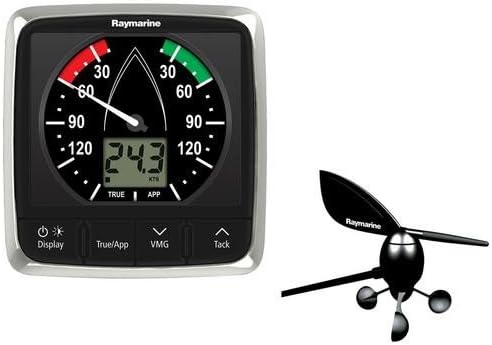
The Raymarine i60 Wind System offers a complete solution with the masthead transducer included so you get everything needed for installation. It features an easy to read analog dial that combines traditional navigation feel with modern digital data like VMG and tack info.
We may earn a commission when you buy through this link, at no additional cost to you.
Its design is energy efficient making it suitable for small vessels with limited power budgets. The footprint is identical to older ST60 models so you can upgrade your old instruments without modifying the dashboard which is a huge benefit for retrofit projects.
The main trade-off is the higher price point compared to simpler handheld units. However for a permanent boat installation this system provides reliable continuous data that is essential for long voyages and professional sailing tasks.
Select this if you want a full boat wind instrument that is easy to install and power efficient. It is a premium choice for boaters who need dependable wind data integrated directly into their navigation dashboard.
Getting both the display and masthead in one package simplifies the buying process and ensures compatibility between parts.
Low power consumption means this system can run for long periods without draining your boat battery significantly during trips.
We may earn a commission when you buy through this link, at no additional cost to you.
This system centers around a masthead wind vane transducer engineered specifically to handle saltwater exposure and harsh conditions. It provides comprehensive data including true wind angle and speed which are vital for advanced sailing and navigation.
We may earn a commission when you buy through this link, at no additional cost to you.
The transducer ensures years of trouble free operation thanks to its robust build quality. The display allows you to customize data fields so you can focus on the metrics that matter most to your specific sailing style.
Because it is a full professional system the setup and cost are significant. It is not for casual sailors who just want a quick check but for those committed to a high quality instrument setup on their boat.
Consider this if you need reliable true wind data and are willing to invest in a long term solution. It is best for serious sailors who value precision and durability in their marine electronics.
Accurate true wind angle helps you optimize your sail trim and course for maximum speed and efficiency.
The rugged design ensures the sensor survives salt spray and storms so your data remains consistent over time.
We may earn a commission when you buy through this link, at no additional cost to you.
The Mcbazel 3 in 1 offers exceptional value for sailors who want a basic wind tool without spending much money. It measures wind speed temperature and wind level using the Beaufort scale which is a simple way to describe wind strength on the water.
We may earn a commission when you buy through this link, at no additional cost to you.
Its dual line LCD displays data clearly and the backlight helps you read it in dark conditions. The auto power off feature saves energy so the device is ready when you need it without draining batteries unnecessarily.
The main trade-off is a simpler build compared to premium models and it does not come with a protective pouch. However for the price it performs reliably for casual use and fits easily in a pocket for quick checks.
Choose this if you are on a tight budget but still need accurate wind data. It is the best entry level choice for new sailors or those who only need occasional wind measurements.
Showing wind level on the Beaufort scale makes it easy to communicate wind conditions without using complex numbers.
This model costs significantly less than others while still giving you the essential wind and temperature data you need.
We may earn a commission when you buy through this link, at no additional cost to you.
Selecting the right marine anemometer involves weighing factors like installation type accuracy and durability to match your specific sailing needs and budget.
Decide whether you need a handheld unit for occasional checks or a permanent masthead system for continuous data. Handheld models are portable and easy to use but require manual operation while permanent systems offer automatic data streams to your display.
Handheld units are best for casual sailors while permanent systems suit those who rely on wind data for navigation and racing.
Look for models with dual sensors or calibrated readings to ensure you get true wind data even in low wind conditions. Sensitive vanes help you detect subtle changes in air flow which can be critical for adjusting sails.
Higher sensitivity and calibration lead to better decision making on the water.
Marine environments expose electronics to salt water and humidity so choose devices with salt resistant housing. Ensure the unit has a waterproof rating or comes with a protective carrying case to prevent damage.
Durable construction prevents corrosion and extends the lifespan of your instrument.
A clear display with backlight is essential for reading data at night or in low light. Look for units that show wind speed temperature and other relevant metrics clearly on a large screen.
An easy to read interface reduces errors when you need quick information.
Advanced systems provide VMG tack angle and true wind calculations which are useful for serious sailors. Basic handhelds might only show wind speed and temperature but that is often enough for casual use.
Choose features that match your level of sailing expertise and navigation needs.
Battery powered handhelds offer portability but require you to carry spares. Integrated systems often draw power from the boat but need wiring and installation.
Check battery life and power requirements to ensure the device stays on when you need it.
Some handhelds have tripod holes or magnetic mounts for flexible placement on deck or rails. Permanent systems need fixed mounting on the mast which requires planning.
Flexible mounting can help you get cleaner wind data away from obstacles.
Prices vary widely from under thirty dollars for basic handhelds to nearly a thousand for full systems. Determine how much you need the data before buying to avoid overspending on features you will not use.
A moderate budget often yields the best balance of quality and functionality.
Always start by calibrating your handheld unit according to the manufacturer instructions before using it on the water to ensure accurate readings.
For permanent systems ensure the masthead transducer is installed at the highest point to avoid turbulence from the sails or cabin.
Rinse your device with fresh water after exposure to salt air to prevent corrosion and store it in a dry place when not in use.
Apparent wind is the wind you feel on the boat which combines the true wind with the boat motion. True wind is the actual wind direction and speed independent of your boat motion. Anemometers help calculate true wind from apparent wind and boat speed data.
Not necessarily. For casual sailing a handheld anemometer is often sufficient. However if you race or navigate long distances a permanent system provides continuous data that improves safety and performance.
Calibration depends on the model and usage. Frequent use in harsh conditions may require more frequent checks. Refer to your manual for specific recommendations and use a known reference if available.
Generally no. Handheld units are designed for portable use and lack the wiring and masthead integration needed for permanent installation. They are meant to be carried rather than fixed to a boat.
Differences can arise from height above water and local obstructions. Also apparent wind varies with boat speed so different vessels may read different speeds at the same time.
The Beaufort scale describes wind strength using simple terms like light breeze or gale. It is useful for quick communication and estimation when precise numbers are not available or needed.
Rinse the unit with fresh water after every saltwater trip and dry it thoroughly. Store it in a dry case or compartment to minimize exposure to salt and moisture when not in use.
The BTMETER BT-100 and Mcbazel 3 in 1 offer great value for handheld needs while the Raymarine systems provide professional integrated solutions for serious sailors.
Prioritize accuracy and durability if you rely on wind data for safety but choose a portable unit if you only need occasional checks on deck.
Always verify current availability and pricing before buying since marine electronics can change as new models enter the market.