
iDPRT SP310
4.0Editor score
Native Linux driver support
Fast 4 ips print speed
Versatile label width range
Finding a reliable label printer for Linux can be challenging due to driver limitations in the open source ecosystem. Users often struggle with proprietary software that does not support their operating system natively. This guide focuses on models known for broad compatibility and robust community support.
We evaluated ten top-rated thermal printers based on their ability to work with Linux distributions like Ubuntu and Debian. Our analysis considers USB connectivity, open driver availability, and performance metrics such as print speed and resolution. This ensures you find hardware that integrates smoothly with your workflow.
Each pick below highlights key specifications, pros, and cons to help you make an informed decision. Prices and availability change frequently, so always check the current listing before purchasing. We aim to provide clear, unbiased information to streamline your selection process for office or shipping needs.
4.0Editor score
4.6Editor score

4.4Editor score
As an Amazon Associate we earn from qualifying purchases.
This table provides a side-by-side comparison of all ten thermal printers selected for this guide. We highlight key specifications such as print width, connection type, and resolution to help you quickly identify the best fit for your Linux environment.


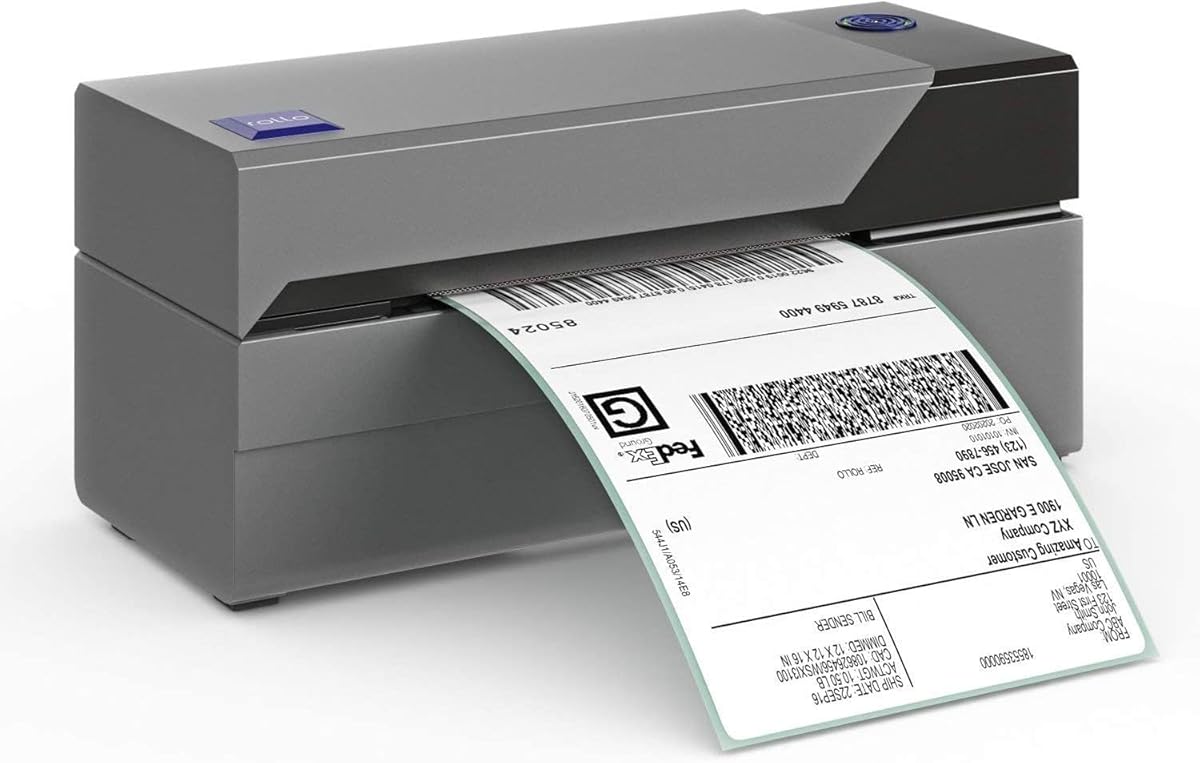
The Rollo USB printer stands out as a top choice for Linux users due to its robust compatibility and commercial-grade build quality. With a rating of 4.6 stars, it delivers reliable performance for shipping and warehouse labels without the need for expensive ink cartridges.
We may earn a commission when you buy through this link, at no additional cost to you.
Its high-speed thermal technology prints up to 150mm per second, ensuring you can handle high volumes efficiently. The 203 DPI resolution provides clear, scannable barcodes, while the direct thermal method keeps operational costs low by eliminating toner replacements.
While it lacks Bluetooth connectivity, the USB connection is stable and works seamlessly with Linux drivers. The only minor trade-off is the initial investment compared to budget models, but the durability and speed justify the expense for serious users.
Businesses and frequent shippers should buy this printer for its ability to integrate with major platforms like Shopify and UPS. It remains a solid recommendation for anyone needing a dependable, high-performance thermal printer on Linux.
The 150mm/s print speed allows for rapid label generation, reducing wait times during peak shipping periods.
Compatible with third-party brands and major shipping platforms, reducing reliance on proprietary consumables.
We may earn a commission when you buy through this link, at no additional cost to you.
The iDPRT SP310 is an excellent budget option specifically noted for its dedicated driver support on Linux systems. With a rating of 4.0, it offers a practical solution for small businesses needing reliable labels without breaking the bank.
We may earn a commission when you buy through this link, at no additional cost to you.
Its design supports labels from 1 to 3.35 inches, covering most common address and file folder needs. The 4 inches per second speed is faster than many competitors, ensuring efficiency without compromising on print clarity due to the 203 DPI resolution.
Although it lacks the broad ecosystem support of premium models, the unlocked system bypasses microchip limitations, reducing long-term costs. The main limitation is its narrower label range, which may not suit larger packaging requirements.
Users prioritizing cost and direct OS compatibility should buy this model. It is an ideal entry-level thermal printer for Linux users managing inventory or home office tasks.
Bypasses proprietary microchip roll limitations to significantly reduce operating costs for small businesses.
Features dedicated individual drivers for Linux, ensuring a plug-and-play experience without complex configuration.
We may earn a commission when you buy through this link, at no additional cost to you.
The Brother QL-570 offers premium professional features for Linux users who require superior label quality. Its high resolution of 300 x 600 dpi ensures sharp text and detailed imagery, making it suitable for branding and intricate designs.
We may earn a commission when you buy through this link, at no additional cost to you.
With a print speed of 68 labels per minute, it handles moderate volumes effectively. The inclusion of P-Touch software allows for customized label creation, and the two-year limited warranty provides peace of mind for business investments.
However, the higher price point and reliance on Brother's proprietary tape system are trade-offs to consider. Users must weigh the quality benefits against the cost of ongoing consumables compared to open systems.
Organizations needing professional-grade labels should buy this printer for its reliability and print fidelity. It is a strong choice for those prioritizing quality over budget constraints.
300 x 600 dpi resolution delivers sharp and detailed text and imagery for professional applications.
Backed by a two-year limited warranty, ensuring long-term reliability and customer support availability.
We may earn a commission when you buy through this link, at no additional cost to you.
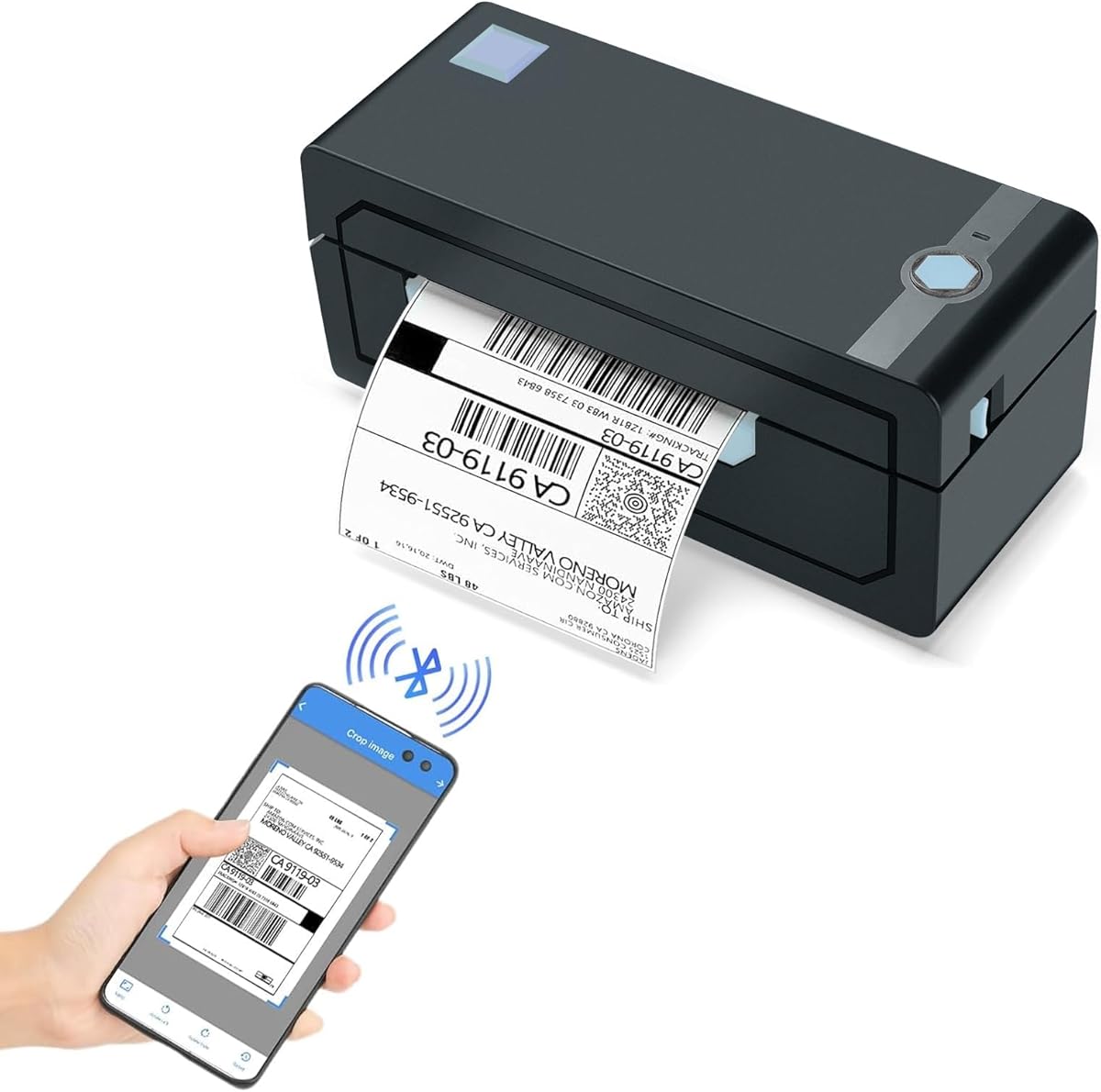
The JADENS Bluetooth thermal printer provides a versatile solution for shipping labels with both wireless and wired options. Rated at 4.4, it delivers clean, mess-free printing without ink or toner, making it economical for small businesses.
We may earn a commission when you buy through this link, at no additional cost to you.
Its high tech print head ensures 203 DPI quality for clear labels. While Bluetooth works for Windows and Mac, Linux users can rely on the USB connection which is supported for reliable operation without wireless dropouts.
The main limitation for Linux users is that the wireless features are restricted to other operating systems, requiring a cable for integration. Additionally, the label width range is specific to 1.57 to 4.1 inches.
Users needing basic shipping label functionality should consider this model for its ease of setup. It is a solid choice for those who can work with a USB connection on Linux.
No ink or toner needed ensures clean operation and reduces ongoing consumable costs significantly.
Compatible with major marketplaces and shipping platforms like Amazon, Shopify, and eBay for seamless workflow.
We may earn a commission when you buy through this link, at no additional cost to you.
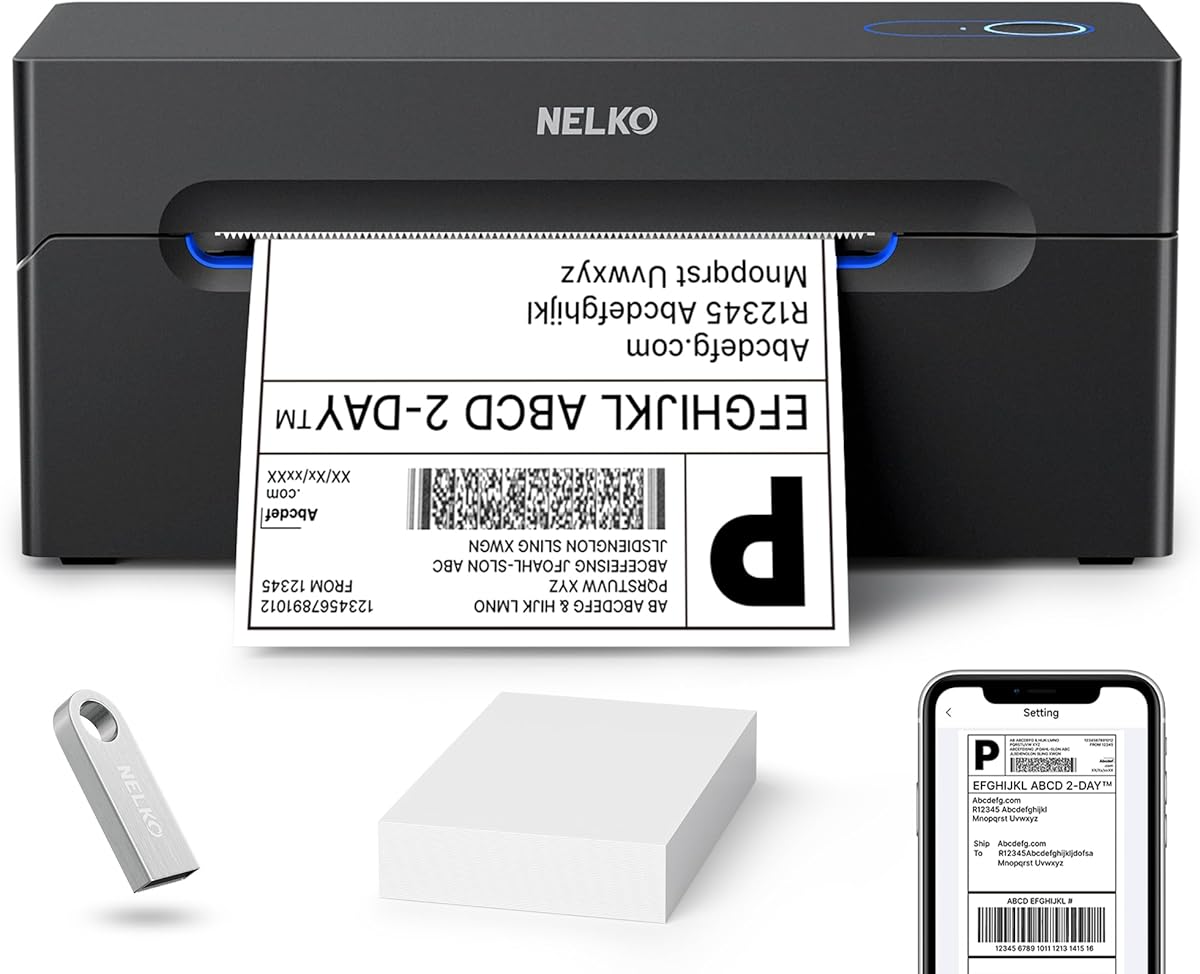
The Nelko Bluetooth Thermal Label Printer is designed for efficiency with a print speed of 150 mm/s. Rated at 4.3, it uses advanced direct thermal technology to produce clear labels without the need for ink or toner.
We may earn a commission when you buy through this link, at no additional cost to you.
Its compatibility with major shipping platforms makes it a good helper for cost savings. Linux users can connect via USB for a stable connection, though wireless features require the app and have restrictions on certain Mac systems.
The compact design saves space on your desk, making it suitable for home use. However, the dependency on specific apps for mobile printing might complicate workflows that do not support such software on Linux.
Businesses needing a small, efficient printer should buy this model for its speed and ease of use. It is best suited for those who prioritize a clean, cost-effective shipping setup.
Achieves printing speeds up to 150 mm/s, allowing up to 72 sheets of 4×6 labels per minute.
Much smaller than traditional printers, requiring only a small piece of space to achieve printing.
We may earn a commission when you buy through this link, at no additional cost to you.
The Brother P-touch CUBE Plus uses Bluetooth to design and print custom labels up to 24mm wide. Rated at 4.5, it offers flexible software compatibility for creative templates with various fonts and symbols.
We may earn a commission when you buy through this link, at no additional cost to you.
Ideal for home offices and crafting businesses, it comes with starter tapes and a built-in battery. However, it is not designed for large shipping labels, limiting its utility for logistics compared to thermal shipping printers.
The reliance on specific TZe tapes means ongoing costs may add up, and the narrow width restricts broader labeling needs. Linux users should note that mobile design is a key feature here.
Users looking for portable, creative labeling should buy this model for its convenience and style. It is perfect for personal organization rather than bulk shipping tasks.
Offers a wide assortment of pre-designed home and office templates to help labels stand out.
Uses Bluetooth wireless technology to design and print from mobile devices or desktop easily.
We may earn a commission when you buy through this link, at no additional cost to you.
The Brother QL-700 is a high-speed professional label printer capable of printing up to 93 labels per minute. Rated at 4.4, it creates cost-effective paper labels for packages, envelopes, and more with no ink required.
We may earn a commission when you buy through this link, at no additional cost to you.
Its ability to print continuous-length paper and film tapes allows for banners and signs up to 3 feet long. The auto cutter ensures precise cuts, making it efficient for handling multiple labels at a time.
While it excels in speed and versatility, the proprietary tape system and cost are considerations for budget-conscious users. Linux compatibility depends on driver support, which may require specific configuration steps.
High-volume offices needing speed should buy this printer for its efficiency and professional features. It is a robust choice for managing diverse labeling tasks quickly.
Prints up to 93 labels per minute, ensuring high volume tasks are handled with speed.
Supports continuous-length paper and film tapes for various applications beyond standard labels.
We may earn a commission when you buy through this link, at no additional cost to you.
The SUPVAN T50M Pro is an ideal machine for home and small business organization. Rated at 4.5, it prints labels from 3/4 to 2 inches wide with enhanced image quality from its dedicated app.
We may earn a commission when you buy through this link, at no additional cost to you.
The free app allows customization with fonts, frames, and icons without registration. This makes it accessible for various projects, from storage bins to jewelry labels, ensuring neat organization without complex software.
Its compact nature and reliance on mobile apps limit heavy-duty shipping tasks. Linux users should check app compatibility as the primary interface is often mobile based rather than desktop driven.
Home users needing organizational labels should buy this model for its ease and flexibility. It is perfect for small scale projects requiring clean, clear labels.
Customize labels with 30 fonts, 50 frames, and 660 icons for free without registration.
High-resolution image processing ensures clear output with formal and rich design quality.
We may earn a commission when you buy through this link, at no additional cost to you.
The ETIKEZ Bluetooth Thermal Printer offers a compact solution for shipping labels with 203 dpi resolution. Rated at 4.4, it works with the Labelnize app and supports various courier platforms like Amazon and Shopify.
We may earn a commission when you buy through this link, at no additional cost to you.
Setup is straightforward with clear steps to connect and print. For computers, the USB connection ensures stable operation while mobile users rely on the app for wireless printing.
The lack of direct Bluetooth pairing means some workflow flexibility is lost. However, the lightweight design fits easily into limited spaces like studios or home corners.
Small businesses needing a simple shipping printer should buy this model for its ease of use. It is best for those who prioritize affordability and compact design.
Step-by-step instructions ensure quick installation and efficient printing for small business needs.
Supports major courier platforms like FedEx and USPS for streamlined logistics management.
We may earn a commission when you buy through this link, at no additional cost to you.
The Brother P-Touch PT-D610BT is a business professional tool designed for efficient organization. Rated at 4.5, it allows seamless label creation via Bluetooth or USB with a template library for asset management.
We may earn a commission when you buy through this link, at no additional cost to you.
The built-in memory stores frequently used labels for quick reprinting, while the large display previews labels before printing to ensure accuracy. This reduces waste and maintains a professional appearance.
Cost and tape width limitations make it less suitable for shipping than dedicated thermal printers. However, its robust features suit office environments needing structured labeling workflows.
Professionals managing assets and inventory should buy this model for its efficiency and reliability. It offers advanced features that justify the investment for business operations.
Built-in memory stores up to 90 labels for quick reprinting and streamlined workflows.
Large full color LCD allows you to preview labels before printing to ensure accuracy.
We may earn a commission when you buy through this link, at no additional cost to you.
Selecting a label printer for Linux requires careful attention to driver support and connectivity options to ensure seamless integration with your system.
Ensure the printer has specific Linux drivers available. Manufacturers like iDPRT and Rollo often provide open drivers that work with common distributions.
Look for plug-and-play support to minimize configuration effort and ensure reliable performance.
USB connections are often the most stable choice for Linux systems, avoiding wireless driver complexities. Bluetooth requires specific app support which may not always be compatible with desktop Linux environments.
Select a model that supports the connection type your setup prefers for consistent operation.
Print speed impacts efficiency, especially for high-volume shipping. Aim for at least 150mm per second for professional needs.
Resolution of 203 DPI or higher ensures clear barcodes and text for scanning purposes.
Choose a printer that matches your label size requirements. Common shipping labels are 4×6 inches, while smaller office labels might need 1 inch width.
Check that the printer supports the specific widths of the labels you intend to use.
Thermal printers do not require ink or toner, reducing long-term costs. However, some models rely on proprietary chips that increase consumable prices.
Open systems allow third-party labels which can significantly save money over time.
Ensure the printer works with your shipping platforms such as Shopify or Amazon. Some devices come with specific apps or software to streamline this process.
Check that these tools support your Linux environment to avoid workflow interruptions.
Commercial grade printers are built to handle continuous use, whereas budget models may overheat or jam more frequently.
Consider the volume of labels you print daily to choose a model that suits your workload.
A solid warranty like a two-year limited coverage offers peace of mind against hardware failures. Check if customer support is responsive to Linux users.
Good after-sales service ensures you can resolve issues quickly without downtime.
Install the provided Linux drivers by downloading them from the official manufacturer's website or using the package manager. Follow the installation instructions carefully to ensure the system recognizes the printer correctly.
Calibrate the printer by adjusting the settings in the software to match the label width. This step is crucial to prevent misalignment and ensure every label prints within the designated area.
Store your printer in a cool, dry environment to protect it from dust and heat. Regularly clean the print head with a soft cloth to maintain print quality and extend the device lifespan.
Yes, several models like the iDPRT SP310 and Rollo USB offer native or third-party driver support for Ubuntu. Always check the specific documentation to confirm compatibility with your Ubuntu version before purchasing to ensure smooth operation.
Thermal printers are highly suitable for Linux because they eliminate the need for complex ink systems. Many thermal printers use standard CUPS drivers which are native to Linux environments making setup straightforward and reliable.
Connecting a Bluetooth printer on Linux often requires pairing via the system settings and then configuring the driver. Note that some printers only work with specific apps which may limit functionality on desktop Linux systems.
The most common label width for shipping is 4×6 inches. Many thermal printers in this guide support this size standard ensuring compatibility with major carriers and shipping platforms used by small businesses.
Yes, many models like the Rollo and iDPRT SP310 support third-party labels due to open systems. This flexibility helps reduce costs significantly compared to using proprietary branded label rolls exclusively.
Most thermal printers work with standard CUPS printing software built into Linux. However, some manufacturers provide dedicated drivers or applications that may require specific steps to install and configure correctly.
Incorrect printing is often caused by misaligned label settings or calibration errors. Run the printer's calibration process before starting a new label batch to ensure accurate positioning and clean output every time.
With proper maintenance, commercial-grade thermal printers can last for several years of daily use. Regular cleaning of the print head and proper storage conditions help maintain performance and extend the device lifespan significantly.
Choosing the best label printer for Linux involves balancing compatibility, performance, and cost to find the right fit for your specific needs.
Prioritize models with explicit driver support and stable connectivity like USB to avoid common open source integration issues that disrupt your workflow.
Always check current prices and availability before buying as costs fluctuate frequently and ensure you get the most value for your investment.