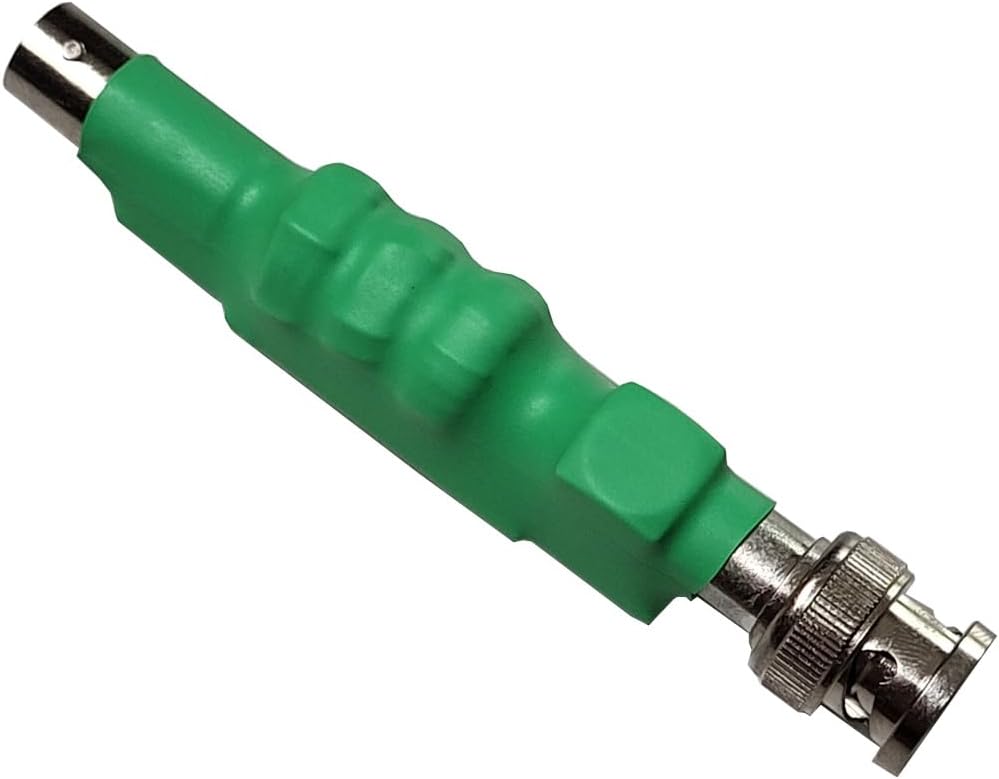
K9DP QRP 20 Meter Portable
4.8Editor score
Lightweight 35 gram design
Up to 20 watts power
Male female BNC connectors
This guide compares the top 10 ham radio bandpass filters to help you reduce interference and improve signal clarity across all major amateur bands.
Ham radio operators often face significant interference challenges that can degrade communication quality. Choosing the right bandpass filter ensures your receiver focuses only on desired frequencies while rejecting noise and strong out-of-band signals that cause overload.
We evaluated ten distinct bandpass filters based on power handling, frequency range, connector types, and overall build quality. Our comparison highlights models suitable for fixed stations, portable operations, and specific band needs like HF or VHF/UHF communications.
Each product entry details key specifications and real-world performance characteristics. While pricing varies based on features and materials, remember that costs can fluctuate frequently. Always check the current listed price before making your final purchasing decision today.
4.8Editor score

5.0Editor score

4.1Editor score
The following table provides a side-by-side overview of each filter model evaluated in this guide. Compare key specifications like frequency coverage, power ratings, and connector types to find the best match for your specific station requirements and operating preferences.
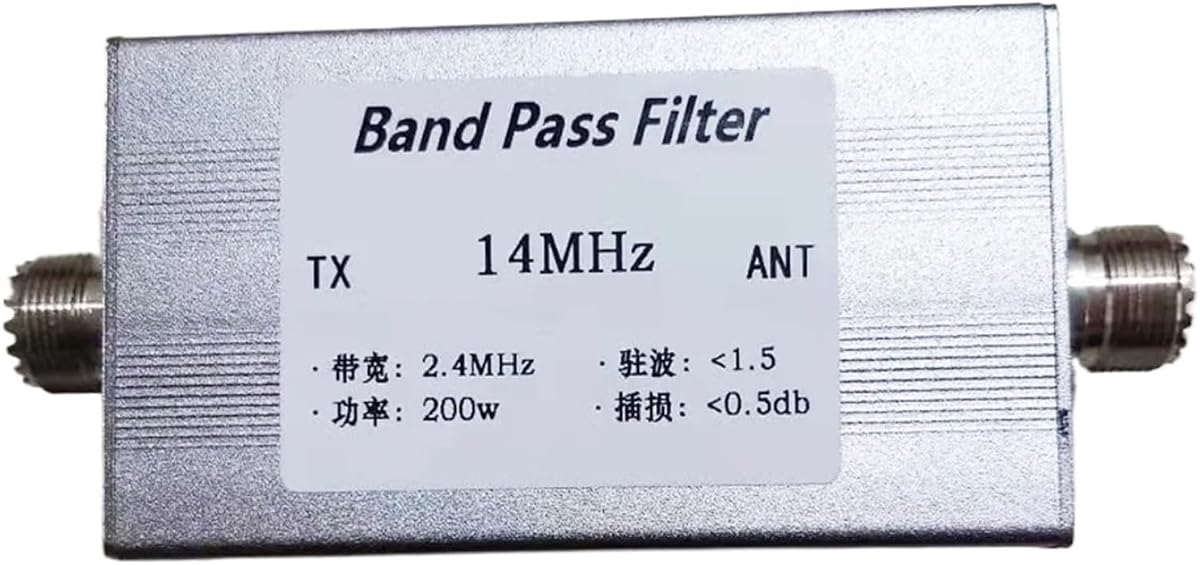


This filter stands out as the top choice for serious operators needing robust performance on the 14MHz band. With a perfect 5.0 rating, it delivers high isolation and precise filtering that protects your equipment from unwanted signals.
We may earn a commission when you buy through this link, at no additional cost to you.
The LC filter circuit significantly enhances signal reception and transmission quality within the shortwave range. Its ability to handle 200 watts makes it ideal for demanding contest operations where power levels are high and clarity is critical.
While the narrow band design limits flexibility, it ensures focused frequency filtering for optimal radio performance. The specialized design effectively reduces unwanted signals, which is a trade-off worth making for dedicated single-band stations.
If you need a reliable solution for 20-meter operations that can withstand high power, this filter is the clear recommendation. It balances build quality with performance to meet the rigorous demands of professional ham radio setups.
Capable of handling up to 200W of power, this unit ensures you can transmit without fear of damaging the filter during intense operations.
The M-type female connector provides a secure and reliable connection to your radio equipment, preventing signal loss at the interface point.
We may earn a commission when you buy through this link, at no additional cost to you.
This module offers an excellent way to manage multiple bands without installing separate filters for each frequency. It covers the 2m, 1.25m, 70cm, 33cm, and 23cm bands, giving you flexibility to explore various communication ranges easily.
We may earn a commission when you buy through this link, at no additional cost to you.
The pushbutton switch enables seamless integration with bias tee-powered devices, which simplifies your station setup. You can switch between bands or use the pass-through feature depending on your current operational needs without extra hardware.
However, the 4.1 rating suggests some users may find the performance inconsistent across all filters. It is best suited for advanced operators who understand selective signal processing and need coverage across UHF frequencies primarily.
For stations looking to cover a wide range of VHF and UHF bands in one package, this is a strong consideration. Just ensure you are comfortable with the technical requirements of bias tee integration before purchasing this module.
The filter bank module covers five ham radio bands, providing you with a wide range of frequencies to explore and communicate on efficiently.
The pushbutton switch enables application of a 4.5V bias tee voltage to the input SMA, allowing for smooth integration with compatible devices.
We may earn a commission when you buy through this link, at no additional cost to you.
This filter stands out for its extensive range of frequency options, allowing you to choose the exact band you need for your specific operating environment. It handles up to 200w ensuring robust performance in high-power applications like contesting or fixed station work.
We may earn a commission when you buy through this link, at no additional cost to you.
The compact and lightweight design makes it easy to integrate into your setup without taking up much space or adding significant weight. It separates signals with precision, minimizing interference for enhanced sensitivity across your chosen frequency range.
Since the rating is listed as N/A, you may want to verify user experiences before committing. However, the high power capacity and customizable interface suggest it is a solid choice for those who know exactly which band they require.
If you need a specific frequency like 18MHz or 28MHz rather than standard 14MHz, this flexibility is valuable. The isolation capabilities ensure that unwanted signals are kept at bay, improving your overall communication clarity significantly.
Handles up to 200w (SSB CW AM FM FSK), ensuring robust performance in high-power applications without risk of component damage.
High Isolation Bandpass Filter separates signals with precision, minimizing interference for enhanced sensitivity during transmission and reception.
We may earn a commission when you buy through this link, at no additional cost to you.
Designed specifically for the 40-meter band, this filter excels at reducing out-of-band noise to improve receiver sensitivity. Its 5.0 rating reflects its ability to maintain signal integrity even when strong interference is present nearby.
We may earn a commission when you buy through this link, at no additional cost to you.
The SL16-F type-N female connectors ensure a robust connection that will not loosen easily under vibration. The anodized aluminum casing provides durability and protection against environmental factors while keeping the unit compact.
It handles high power across multiple modes including SSB, CW, AM, FM, and FSK making it versatile for any operating style. This wide compatibility ensures you can use it regardless of your preferred communication method.
If you operate primarily on 40 meters, this dedicated filter is a perfect addition to your station. It focuses on one target band to maximize performance where it matters most for your specific hobby interests.
Improves receiver sensitivity and reduces out-of-band noise, which helps clear up weak signals during noisy operating conditions.
Robust connectors and anodized aluminum casing make this unit compact and durable for long-term station use without degradation.
We may earn a commission when you buy through this link, at no additional cost to you.
This filter is optimized for the 3.8MHz shortwave communication band, offering high power support for robust transmission. While it is less detailed in public specs, it is known to improve sensitivity and reduce interference effectively in shortwave setups.
We may earn a commission when you buy through this link, at no additional cost to you.
The 200W power handling capability ensures that it can withstand high power outputs from most standard transceivers without failure. It is designed specifically for short wave communication needs where specific frequency targeting is essential for clarity.
Given the limited public data, it is best suited for operators who know exactly they need a 3.8MHz filter. It complements other high-frequency equipment by isolating the desired band from adjacent signals that cause distortion.
If you operate in the lower HF bands and need reliable filtering for 3.8MHz, this unit serves that purpose well. Always verify connector compatibility with your station before installation to ensure a secure fit.
Handles up to 200W of power, making it suitable for standard transceivers operating in the shortwave communication range.
Designed specifically for short wave communication needs, it isolates the desired band from adjacent signals that cause distortion.
We may earn a commission when you buy through this link, at no additional cost to you.
This filter is designed for RFID receivers and similar low-power applications at 915MHz. It features imported SMD components for stable performance and a unique shielding design that ensures durability in practical installations.
We may earn a commission when you buy through this link, at no additional cost to you.
The passband ripple coefficient is good and out-of-band suppression capability helps keep unwanted frequencies from entering your receiver. This makes it effective for filtering specific bands like 915MHz where narrow bandwidth is needed.
However, the maximum withstand power is limited to 1W meaning it is not suitable for standard high-power ham radio transmission. It serves best for receive-only systems or low-power digital communication projects like telemetry.
If you need a filter for a 915MHz receiver project, this is a solid and affordable option. Just ensure your power output does not exceed 1W to avoid damaging the internal components during operation.
Imported SMD components ensure stable performance while the unique shielding design keeps it durable and practical for daily use.
Maximum withstand power is limited to 1W meaning it is not suitable for standard high-power ham radio transmission.
We may earn a commission when you buy through this link, at no additional cost to you.
This compact filter targets the 10-meter band with a bandwidth ranging from 7 to 11 MHz. Its low insertion loss ensures that you do not lose significant signal strength while filtering out unwanted noise and interference.
We may earn a commission when you buy through this link, at no additional cost to you.
The SMA female male interface is standard and easy to connect to most receivers. It is an ideal choice for portable setups where space is limited and you need a lightweight solution for 10-meter operations.
While it is a single unit with limited flexibility, it performs reliably within its specified range. The 4.8 rating suggests high customer satisfaction regarding its build quality and effectiveness in reducing interference.
If you are building a small station for 10 meters and need a cost-effective filter, this is a great option. Always check the connector thread type on your device to ensure it matches this filter perfectly.
Low insertion loss ensures that you do not lose significant signal strength while filtering out unwanted noise and interference.
The SMA female male interface is standard and easy to connect to most receivers, simplifying the setup process significantly.
We may earn a commission when you buy through this link, at no additional cost to you.
This filter is specifically designed to help HF radios that struggle with front-end overload from AM broadcast interference. Its lightweight and portable design make it perfect for Parks on the Air or Summits on the Air operations.
We may earn a commission when you buy through this link, at no additional cost to you.
Tested up to 100 watts with SSB, CW, and digital FT8 it ensures reliable performance in the field. The high-quality capacitors and toroids provide robust filtering that protects your receiver from strong local signals.
The SO-239 UHF connectors ensure compatibility with many amateur radio stations without needing adapters. Fully assembled and tested in the USA by K9DP, you can trust its quality and durability for your outdoor adventures.
If you operate portable and face interference from broadcast towers, this is an ideal solution. It balances power handling and weight to support your mobility goals while keeping your receive chain clean and clear.
Designed to help amateur HF radios that struggle with front-end overload from AM broadcast interference and strong local signals.
Weighing just 78 grams and 4 inches long, it is perfect for POTA, SOTA, and Field Day operations in the field.
We may earn a commission when you buy through this link, at no additional cost to you.
This portable bandpass filter targets the 20-meter band with a focus on lightweight and compact performance. At only 35 grams, it is one of the lightest options available for hikers who need to filter signals effectively.
We may earn a commission when you buy through this link, at no additional cost to you.
It is designed to reject interference from other nearby stations operating on different bands, improving clarity on your target frequency. The high-quality capacitors and toroids ensure reliable filtering performance during critical operating moments.
The Male/Female BNC connectors make it easy to use with compatible equipment without adapters. Tested up to 20 watts with SSB, CW, and digital FT8, it suits QRP operators well but not high-power stations.
If you prioritize portability and operate low power, this filter is a top recommendation. Its compact size and effective filtering make it a valuable tool for field operations where every gram counts significantly.
Designed to reject interference from other nearby stations operating on different bands, improving clarity on your target frequency.
The Male/Female BNC connectors make it easy to use with compatible equipment without adapters for quick field setup.
We may earn a commission when you buy through this link, at no additional cost to you.
This filter is designed for the 40-meter band offering strong anti-interference capabilities to improve receiver sensitivity. Its robust connectors and durable anodized aluminum casing ensure it withstands regular use in any environment.
We may earn a commission when you buy through this link, at no additional cost to you.
With 200W power handling across SSB, CW, AM, FM, and FSK, it supports various operating modes effectively. The compact design makes it easy to integrate into your station setup without consuming much valuable bench space.
It effectively reduces out-of-band noise which helps in receiving weak signals more clearly during challenging conditions. The build quality suggests reliability for both fixed stations and field operations requiring durable equipment.
If you need a dependable solution for 40 meters that balances performance with durability, this is a strong choice. Its ability to reduce interference while maintaining sensitivity makes it a practical addition to your station.
Its robust connectors and durable anodized aluminum casing ensure it withstands regular use in any environment or condition.
With 200W power handling across SSB, CW, AM, FM, and FSK, it supports various operating modes effectively and reliably.
We may earn a commission when you buy through this link, at no additional cost to you.
Selecting the right bandpass filter requires understanding your specific frequency needs and power requirements. This guide covers the key factors that determine how well a filter will work in your unique station setup.
Every filter is designed to work within a specific frequency range. Ensure that the center frequency and bandwidth of the filter align with the bands you operate on most often to avoid wasting money on incompatible models.
Look for filters that cover your exact band needs such as 40 meters or 2 meters to ensure proper signal selection and interference rejection.
The power rating indicates how much output power the filter can handle without damage. If you operate high power, choose a filter rated for 200W or more. For QRP operations, lower ratings may suffice but must still meet your transmit requirements.
Always check the power handling spec to match your transmitter output so you do not damage the filter during high power transmission.
Connectors determine how the filter interfaces with your station. Common types include SMA, N-type, BNC, and SO-239. Ensure the filter connectors match your equipment to avoid needing extra adapters that introduce signal loss points.
Verify connector types on your radio and antenna to select a filter with compatible connectors for a secure and direct connection.
Filters with aluminum casings and quality components offer better durability and shielding against interference. Look for descriptions that mention robust construction or high-quality capacitors and toroids to ensure long-term performance.
Choose models with durable casings and quality internal components to maintain performance over years of regular use.
Insertion loss measures how much signal strength is lost as it passes through the filter. Lower insertion loss values like less than 1.3dB mean better signal preservation which helps maintain communication range and clarity.
Seek filters with low insertion loss ratings to minimize signal attenuation and keep your transmission quality strong.
If you operate portable, weight and size are critical factors. Lighter units like those under 50 grams are ideal for backpacking or field operations where minimizing gear weight helps you stay mobile.
Prioritize lightweight and compact models if you need to carry your gear to remote locations regularly.
The bandwidth defines the range of frequencies the filter allows to pass. A narrow bandwidth helps reject adjacent signals but may cut off needed signal margins. Balance bandwidth with your operating needs to ensure coverage.
Select a filter with bandwidth that covers your frequency needs without allowing unwanted interference from adjacent channels.
Price varies by features and power handling. Higher power filters typically cost more but offer better durability. Consider your budget alongside the features you need to find the best value for your station.
Compare features against cost to ensure you get the right performance level without overspending on unnecessary capabilities.
Install the filter between your receiver and antenna connector to block unwanted signals before they reach the sensitive input. Ensure all connectors are tightened securely to prevent signal leakage or loose connections that degrade performance.
Check the power handling rating on your filter and do not exceed it during transmission. High power can damage the internal components causing failure or permanent damage to the unit that requires replacement.
Store your filter in a dry place when not in use to protect against humidity or corrosion. Regularly inspect connectors for signs of wear or oxidation and clean them to maintain good contact quality.
A bandpass filter allows signals within a specific frequency range to pass through while blocking unwanted signals outside that range. This reduces interference and improves receiver sensitivity by ensuring only the desired frequencies are processed by your radio.
Yes, bandpass filters can be used for receive only stations to improve clarity. However, ensure the filter matches the frequency range of your receiver to avoid rejecting desired signals. Always verify insertion loss to maintain signal strength.
Identify the amateur band you operate on most frequently such as 20 meters or 40 meters. Match the filter center frequency to that band. For example, a 14MHz filter suits 20 meters while a 7MHz filter suits 40 meters.
No, filters have specific connectors like SMA or N-type. You must match the filter connector to your equipment to ensure a proper fit. Use adapters if necessary but be aware they may add insertion loss to your signal path.
A quality filter should not significantly affect transmit power if its power handling rating matches your transmitter. Always check the power rating and ensure insertion loss is low to avoid reducing effective radiated power.
Filters are still useful even in rural areas to reject unwanted signals and improve clarity. However, you may encounter less interference. Consider your specific needs and budget when deciding whether to install one.
Use a soft brush or compressed air to remove dust from connectors. Avoid harsh chemicals that could damage the plating. Keep connectors dry and store the filter properly to prevent corrosion and ensure long-term performance.
Insertion loss is the amount of signal strength lost when passing through the filter. Lower loss is better as it means stronger signals. High loss can reduce communication range and make weak signals harder to hear clearly.
We covered ten distinct filters ranging from compact portable units to high-power fixed station models. Each offers unique benefits tailored to different bands and operating environments ensuring you find a match for your needs.
Prioritize power handling and connector type to ensure compatibility with your existing station. Also consider portability if you operate frequently in the field to maintain mobility without sacrificing interference rejection.
Prices and availability can change quickly so always check the current listings before buying. Verify the exact connector and frequency specs to guarantee the filter will work with your specific ham radio equipment.