
HP Chromebook 11A G8 Education
4.5Editor score
AMD A4 Processor
Rugged Design
Chrome OS
Finding the right device for young learners is crucial for fostering interest in technology. A good laptop should balance performance with durability while offering access to essential coding platforms and educational apps.
We evaluated ten distinct models ranging from rugged educational Chromebooks to specialized learning tablets. Each product was assessed on processing power, screen quality, and compatibility with popular coding environments like Scratch and Python.
Each pick highlights key strengths and ideal use cases for different age groups. Please note that prices and availability change frequently, so verify current details before making your final purchasing decision today.
4.5Editor score

5.0Editor score

4.2Editor score
As an Amazon Associate we earn from qualifying purchases.
This table provides a side-by-side look at the key specifications and features of every model selected for this guide to help you compare options quickly.




This NIMO laptop stands out as a powerful tool for serious learners. With a perfect five star rating, it offers a full Windows experience capable of running lightweight coding environments smoothly.
We may earn a commission when you buy through this link, at no additional cost to you.
The Intel N150 processor ensures that web based IDEs and educational tools run without lag. The 15.6 inch screen provides ample space for viewing code alongside reference materials which is vital for programming tasks.
While it is a renewed unit, the two year warranty gives families significant peace of mind regarding long term usage. The only trade off is the weight which might be too much for very young children to carry alone.
We recommend this device for elementary to high school students who need a reliable machine for both schoolwork and introductory coding projects outside the classroom environment.
The processing power supports browsers running complex web apps like Scratch or Code.org effectively.
The SSD ensures quick file access and fast boot times even with many educational apps installed.
We may earn a commission when you buy through this link, at no additional cost to you.
The HP Chromebook 11A G8 is an excellent entry level device for young students starting to explore computing. Its rugged design is built to withstand the daily wear and tear of school environments.
We may earn a commission when you buy through this link, at no additional cost to you.
Chrome OS provides a safe and simple interface ideal for introducing basic coding concepts through web apps. The spill resistant keyboard and durable chassis make it a safe choice for active kids.
Storage space is limited on this model but cloud storage and external drives can easily compensate for this lack. The small screen may require squinting for detailed code but works fine for simple blocks.
This Chromebook is perfect for parents seeking a cost effective device that prioritizes durability and ease of use over high end performance capabilities.
Built with classroom abuse in mind it resists drops and spills better than consumer laptops.
Chrome OS limits distractions and keeps the focus on educational content and safety.
We may earn a commission when you buy through this link, at no additional cost to you.
The LEXiBOOK LAPTAB offers a premium experience specifically tailored for younger learners before they transition to full computers. It features a high quality touchscreen that makes interactive coding games intuitive to use.
We may earn a commission when you buy through this link, at no additional cost to you.
Robust parental controls allow parents to manage time and apps ensuring a safe environment for digital exploration. The preloaded ebooks and educational tools provide immediate value without needing additional purchases.
While it lacks the full power of a laptop for complex programming it excels at introducing basic logic and sequences through play. The limited processing power makes it unsuitable for heavy development tasks later on.
This tablet is the best choice for preschoolers and early elementary students who need a safe gateway into coding and digital literacy concepts.
Parental controls allow for secure usage without worrying about unwanted apps or content.
Touch inputs make drag and drop coding exercises easy for small hands to manage.
We may earn a commission when you buy through this link, at no additional cost to you.
The HP Chromebook 14 x360 Plus combines versatility with durability making it suitable for various learning modes. Its flexible hinge allows it to be used as a tablet for drawing code or a laptop for typing.
We may earn a commission when you buy through this link, at no additional cost to you.
The Intel N150 processor delivers smooth performance for web based coding tasks and general schoolwork. The touchscreen interface is helpful for creative coding projects involving visual elements or drag and drop logic.
However the base model only includes 4GB of RAM which can feel limiting when running multiple browser tabs simultaneously. The storage speed is adequate for basic tasks but slower than SSD alternatives.
We recommend this 2 in 1 for students who benefit from touch interaction when learning to code or creating visual projects.
Touchscreen input helps visualize and manipulate code blocks more intuitively.
MIL STD testing ensures the device survives rough handling during active learning sessions.
We may earn a commission when you buy through this link, at no additional cost to you.
This Lenovo Chromebook brings strong connectivity and processing power to young learners needing reliable internet access. The MediaTek Kompanio 520 processor handles multitasking well for a Chromebook in this price range.
We may earn a commission when you buy through this link, at no additional cost to you.
Included accessories like a dock and card reader make it easy to connect external devices for coding projects or presentations. The Full HD touchscreen offers clear visuals for reading documentation or watching tutorials.
Storage is split between internal memory and a card which can be confusing for managing files effectively. Users must rely on the included card to reach full capacity so organization is key.
It is an ideal choice for students who need fast internet speeds and connectivity options for online coding classes.
WiFi 6 ensures low latency during video lessons or online code competitions.
The included accessories save money on buying separate peripherals immediately.
We may earn a commission when you buy through this link, at no additional cost to you.
The VTech Genio JuniorBook is designed to mimic a real computer for children who are not yet ready for a full device. It introduces basic keyboard skills and logic concepts through safe offline activities.
We may earn a commission when you buy through this link, at no additional cost to you.
Bilingual support allows kids to learn English or Spanish simultaneously which can be beneficial for cognitive development. The full size QWERTY keyboard helps them get used to typing layout before using real computers.
Since it does not connect to the internet it is completely safe from online distractions but lacks access to modern coding platforms. Content is fixed so there is no option to download new programming apps.
This is the best starting point for toddlers or preschoolers to understand what a computer looks like and feels like.
No internet connection means zero risk of accessing inappropriate content.
Real keyboard layout helps children transition to real laptops later easily.
We may earn a commission when you buy through this link, at no additional cost to you.
The HP 11 FortisG1m11 is a standard educational Chromebook offering more memory than many budget competitors. The 8GB of RAM allows for smoother multitasking when running multiple learning applications at once.
We may earn a commission when you buy through this link, at no additional cost to you.
Chrome OS provides a streamlined experience that is easy for children to navigate. The lightweight design makes it easy for students to carry between home and school without strain.
It lacks some modern ports and touch capabilities found in newer models which might limit certain creative coding projects. The performance is solid for web based tasks but not for heavy software.
This device is suitable for middle school students who need a reliable and robust laptop for daily educational tasks.
8GB RAM supports running several browser tabs without slowing down.
Built for classroom use with security features that schools appreciate.
We may earn a commission when you buy through this link, at no additional cost to you.
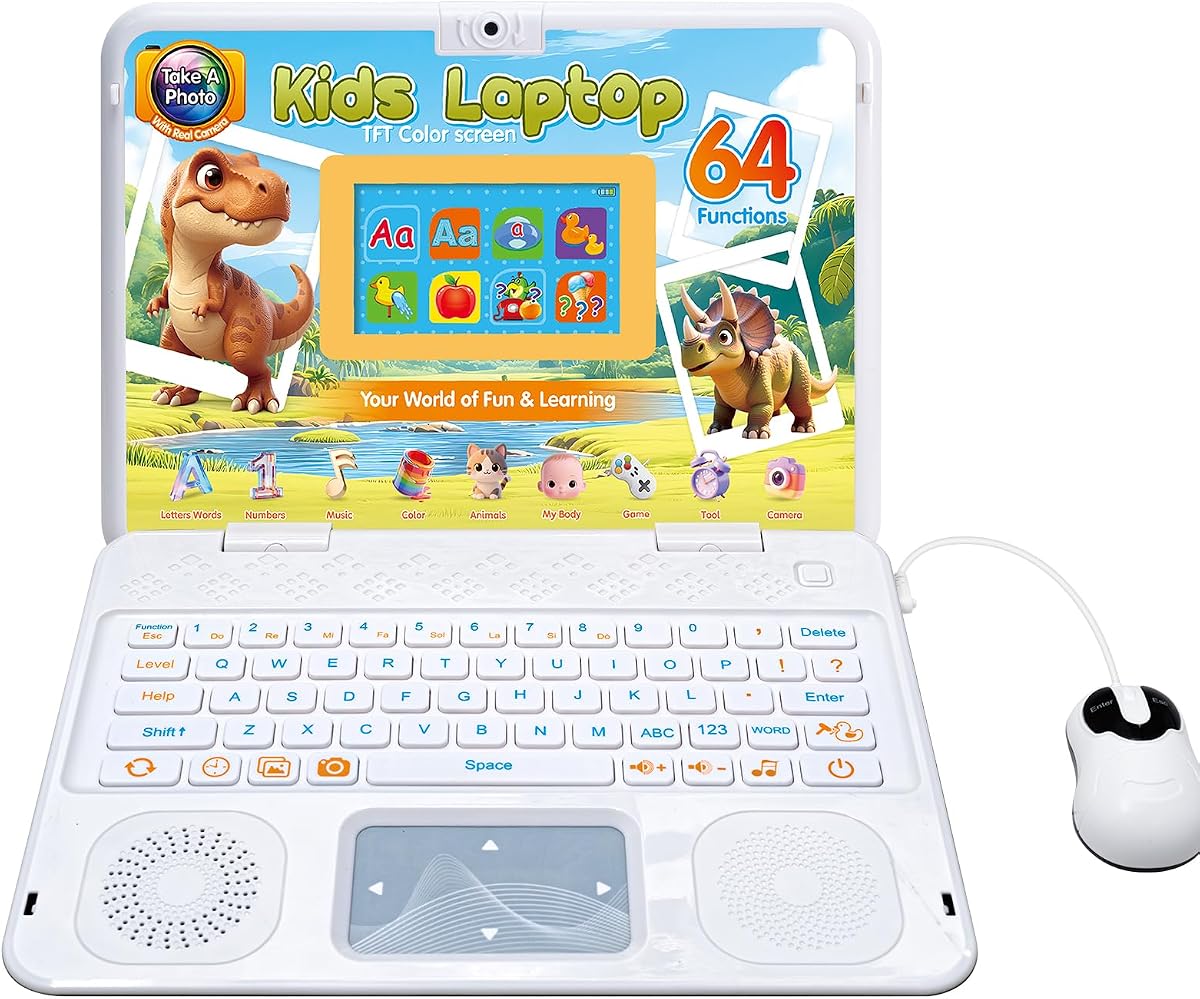
This Kids Laptop with Camera offers a fun and colorful experience for young children eager to explore technology. It features a built in camera that lets them take photos and apply filters safely.
We may earn a commission when you buy through this link, at no additional cost to you.
With 64 learning modes it covers subjects like math and language while including games that stimulate logical thinking. The screen is vibrant and the layout mimics real laptops to build familiarity.
It is important to note this is a toy device and does not run actual operating systems or coding software. It is excellent for engagement but not for teaching actual programming syntax.
Parents can use this to spark initial interest in computers before investing in a more capable device later on.
The camera feature encourages creative thinking and digital expression.
Built in games teach logic patterns which are foundational for coding.
We may earn a commission when you buy through this link, at no additional cost to you.
The LeapFrog ABC and 123 Laptop is designed specifically for preschoolers aged three to seven years. It features a friendly digital character named Pixel who guides children through simple learning activities.
We may earn a commission when you buy through this link, at no additional cost to you.
It includes a coding feature where kids can create simple programs to interact with Pixel. This introduces the concept of sequence and commands in a playful non technical way.
The device is built to withstand drops and spills common with younger children. It uses standard batteries so it remains portable but parents may need to buy replacements periodically.
This is the perfect entry level gift for toddlers to begin understanding computer logic and basic digital literacy.
Simple commands teach cause and effect which is the basis of coding.
Pixel provides feedback and motivation to keep children engaged.
We may earn a commission when you buy through this link, at no additional cost to you.
This affordable Kids Laptop provides a colorful introduction to digital learning for children aged five and up. It features a slim design that makes it easy for small hands to carry and hold comfortably.
We may earn a commission when you buy through this link, at no additional cost to you.
The 48 learning modes cover various subjects including logic and math which are critical for coding skills. A color screen makes the activities engaging and visually appealing for young users.
Like other toy laptops it does not run a real operating system so actual coding is not possible. It serves well as a bridge toy for children interested in computers.
It is a budget friendly option for parents who want to gauge their child's interest before buying a real computer.
Learning modes focus on pattern recognition and logical thinking skills.
Low price point makes it a risk free trial for young learners.
We may earn a commission when you buy through this link, at no additional cost to you.
Selecting the right device depends heavily on the child's age and coding goals. This guide outlines the key factors to consider before purchasing.
Most coding platforms run best on Windows or Chrome OS. Ensure the device can run specific coding software like Scratch or Python.
Verify the OS supports the apps you plan to use for teaching programming fundamentals.
At least 4GB of RAM is needed to run browsers and coding tools without freezing. A modern processor ensures smooth performance.
Look for Intel N series or equivalent chips to handle educational apps efficiently.
A screen larger than 11 inches helps reduce eye strain when reading code. High resolution displays make text sharper and easier to read.
Prioritize Full HD displays for better visibility during long study sessions.
Kids often drop or bump their devices so look for reinforced corners or spill resistant keyboards.
Rugged cases can add a layer of protection for devices used in busy school environments.
A full size keyboard is essential for learning typing and coding syntax. Touchscreens are helpful for visual coding apps.
Ensure the keyboard is comfortable and responsive to encourage typing practice.
USB ports allow connecting external devices like microcontrollers or USB drives. Reliable WiFi is crucial for online courses.
Check for USB C or standard USB A ports based on accessory needs.
Robust controls allow you to limit screen time and block inappropriate sites. Look for built in family safety features.
Software controls help manage apps and browsing habits during learning time.
Prices vary widely so set a budget that aligns with your needs. A good warranty protects against unexpected hardware failures.
Investing in a device with support saves money in the long run if issues arise.
Teach your child to handle the device gently and keep liquids away from the keyboard to prevent damage.
Set up parental controls and user profiles to ensure a safe environment for their online learning sessions.
Regularly update the operating system and apps to ensure access to the latest educational tools and security fixes.
Yes many coding environments like Scratch and Google Colab run directly in the Chrome browser. It is a capable platform for learning web development.
Children can start with visual block based coding around age five. Real text based coding usually begins when they have basic reading and logic skills.
Tablets work well for introductory apps but a laptop is better for real typing and advanced skills. Keyboards are essential for writing actual code.
Most beginner coding tools do not require powerful hardware. Mid range Chromebooks and entry level Windows laptops are usually sufficient.
Scratch and Code.org are excellent starting points for visual coding. Later students can move to Python using simple text editors.
64GB or more is usually sufficient since most coding tools are cloud based. SSD storage is preferred for faster boot times and app loading.
The NIMO 15.6 Student Laptop offers the best balance of power and price for serious young learners. Chromebooks provide excellent alternatives for those prioritizing simplicity and durability.
Focus on the child's current needs rather than future proofing when choosing a device. A simple tool that inspires curiosity is better than a complex one that overwhelms.
Always check current prices and promotions before buying to get the best value for your investment in their education.