
1/2’’ Flow Hall Sensor with NPT Thread
4.7Editor score
Compact light design for easy installation
Integrated magnetic hall effect sensor sealed
Fits standard NPT thread pipes safely
Finding the right Arduino Flow Meter is essential for builders working on irrigation, beverage dispensers, or water monitoring systems. A quality sensor provides accurate data to help you manage resources efficiently. This list highlights top models that integrate seamlessly with microcontrollers.
We evaluated ten popular sensors based on flow range, build quality, and ease of installation. Each entry offers unique advantages depending on your specific project needs. Our selection includes options for various pipe sizes and voltage requirements to ensure compatibility.
Each pick below shows key specifications and real-world applications for DIY enthusiasts. These tools enable precise monitoring for coffee machines, reverse osmosis filters, and more. Note that availability and costs may change over time as markets evolve.
4.7Editor score

5.0Editor score

4.8Editor score
As an Amazon Associate we earn from qualifying purchases.
The following table compares ten top-rated sensors for fluid measurement projects. We highlight flow rates, voltage needs, and connection types to help you choose the right model for your build.


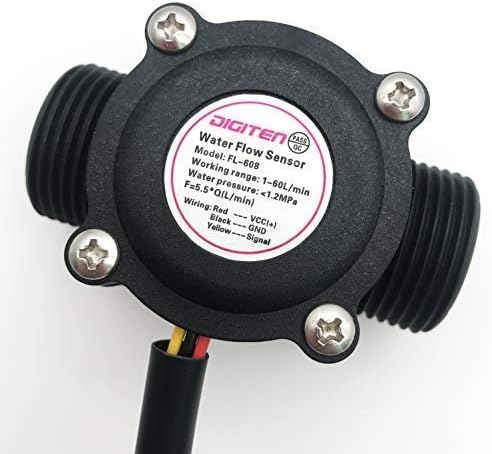
This sensor offers an entry-level solution for builders needing to monitor water usage in automated systems. It features a hall effect sensor that outputs pulses proportional to flow, making it simple to interface with Arduino boards.
We may earn a commission when you buy through this link, at no additional cost to you.
Its lightweight design ensures it fits easily into tight spaces like coffee machines or beverage dispensers. The sealed sensor protects internal components from water damage, ensuring reliability over time in wet environments.
Users should note that flow direction matters for signal output. Installation requires care to align the arrow correctly, but the benefits of accurate flow measurement outweigh the slight setup complexity.
Ideal for hobbyists on a budget, this model delivers solid performance for basic flow monitoring tasks. It is a strong choice for those starting with fluid control in DIY automation.
The small footprint makes it perfect for tight enclosures where space is limited.
Sealed components ensure the sensor stays dry while measuring water flow accurately.
We may earn a commission when you buy through this link, at no additional cost to you.
This sensor is well-regarded for use in cooling setups where consistent flow is vital. It delivers pulse signals that microcontrollers can read to adjust pump speeds or alert on flow issues.
We may earn a commission when you buy through this link, at no additional cost to you.
Its robust build ensures it withstands moderate pressure and temperature variations. The hall effect sensor provides clean output for reliable data logging and control logic in automation.
While not the widest range, it covers many home automation needs efficiently. Users appreciate its compatibility with standard 5V systems used in most DIY boards.
Buyers looking for a dependable flow sensor for cooling loops will find this model effective. It balances cost and performance for moderate flow monitoring tasks.
Designed to handle the thermal and flow demands of PC cooling setups.
Works well within standard voltage ranges to ensure signal accuracy.
We may earn a commission when you buy through this link, at no additional cost to you.
This sensor stands out for its ability to handle higher water volumes while maintaining accuracy. It uses hall effect technology to generate precise pulses for flow calculation in larger pipes.
We may earn a commission when you buy through this link, at no additional cost to you.
Its build quality meets ROHS standards, ensuring it is safe for drinking water applications. The compact waterproof body makes it versatile for use in purifiers or commercial dispensers.
Installation is straightforward with G1.5 inch BSPT threads. Users may need tape if adapting to NPT pipes, but the connection remains secure under pressure.
For projects requiring high-flow monitoring, this model is a top recommendation. It delivers excellent value with robust performance and reliable microcontroller integration.
Supports flow rates up to 150 liters per minute for large systems.
Certified materials ensure safety for drinking water and RO applications.
We may earn a commission when you buy through this link, at no additional cost to you.
This unit is designed with food-grade plastic, making it ideal for applications involving drinking water. It provides reliable flow pulses for monitoring usage in coffee machines or dispensers.
We may earn a commission when you buy through this link, at no additional cost to you.
The broad voltage range allows integration with various power setups without extra regulators. Its hall effect sensor ensures consistent performance across different flow conditions.
While it may have lower user ratings, it performs well for standard home automation tasks. It is a practical choice for builders prioritizing food-safe materials.
Those building projects involving potable water will appreciate its safety features. It offers solid functionality for basic flow control needs.
Constructed with plastics approved for contact with drinking water.
Accepts 5 to 24 volts to fit diverse power supply setups.
We may earn a commission when you buy through this link, at no additional cost to you.
This sensor features a transparent valve body, allowing users to visually inspect rotor movement. This is helpful for troubleshooting flow issues or confirming sensor activity.
We may earn a commission when you buy through this link, at no additional cost to you.
Its durable construction uses stainless steel beads to resist wear. The hall sensor ensures precise pulse generation for accurate digital monitoring.
Packaged as a two-piece set, it offers value for larger projects needing multiple sensors. Users should verify voltage settings for optimal signal output.
Ideal for educational setups where seeing the mechanism matters, this model is useful. It provides practical insights into how flow sensors work internally.
Transparent casing lets you see the rotor spinning during operation.
Two units included make it great for multi-sensor array projects.
We may earn a commission when you buy through this link, at no additional cost to you.
Designed for low-flow tasks, this sensor handles small volumes efficiently. It connects via a 5-7mm hosepipe interface, simplifying setup for garden systems.
We may earn a commission when you buy through this link, at no additional cost to you.
Its hall effect sensor provides steady pulses for accurate detection of low rates. The plastic body is built for safety with drinking water and similar uses.
Users should note its limited pressure tolerance compared to larger models. It is best used where flow pressure stays within specified limits.
This is an excellent pick for delicate projects like drip irrigation. Its compact design fits well in restricted spaces.
Accurately measures slow flows where larger sensors might miss details.
No threads required; connects directly to 5-7mm tubing.
We may earn a commission when you buy through this link, at no additional cost to you.
This sensor is tailored for water heater applications where detecting influent flow is crucial. It feeds pulse signals to controllers that regulate heating based on flow.
We may earn a commission when you buy through this link, at no additional cost to you.
The hall effect rotor assembly ensures precise detection of flow rate changes. Its build quality supports consistent performance over extended use in plumbing systems.
Users appreciate the reliable 5.0 rating and standard interface. It is a robust choice for those working with heating control systems.
For DIYers tackling water heater projects, this model is highly recommended. It delivers accuracy and durability for critical flow control.
Designed specifically to handle heater inlet flow requirements.
Hall effect technology ensures accurate pulse counts for control logic.
We may earn a commission when you buy through this link, at no additional cost to you.
This model offers the added benefit of a pre-attached cable, reducing wiring time. The 1.2M length allows flexible placement away from the board for cleaner setups.
We may earn a commission when you buy through this link, at no additional cost to you.
It includes a standard SM2.54 connector for quick integration with Arduino. Its build quality supports potable water applications reliably.
Users value the convenience of pre-terminated cables for professional-looking projects. It is ideal for installations where space is limited.
For those seeking a plug-and-play solution with premium features, this is the top choice. It simplifies integration significantly for advanced users.
Includes a 1.2m cable to simplify setup in complex enclosures.
SM2.54 connector matches many Arduino pins directly.
We may earn a commission when you buy through this link, at no additional cost to you.
This sensor targets small pipe systems requiring low-flow precision. It fits G3/8 inch connections, making it suitable for compact setups.
We may earn a commission when you buy through this link, at no additional cost to you.
Its hall effect sensor delivers square wave output for easy reading by microcontrollers. The waterproof design ensures durability in wet environments.
Users find it easy to install with standard tools. It is particularly useful for reverse osmosis or drinking water applications.
For tight spaces and small plumbing needs, this model is a great fit. It balances size and performance effectively.
Specially sized for 3/8 inch pipes to minimize footprint.
Waterproof and heat resistant for long service life.
We may earn a commission when you buy through this link, at no additional cost to you.
This model supports higher flow rates suitable for main lines. The long cable helps with routing in large enclosures.
We may earn a commission when you buy through this link, at no additional cost to you.
It uses hall effect tech to track flow up to 60L/min reliably. Its G3/4 interface connects to standard plumbing pipes.
Users have mixed feedback on installation due to size. It remains a strong option for larger capacity needs.
For industrial or heavy-duty DIY projects, it delivers needed capacity. Consider space constraints before buying.
Handles up to 60 liters per minute for robust systems.
1.2m cable allows placement away from control boards easily.
We may earn a commission when you buy through this link, at no additional cost to you.
Selecting the right Arduino Flow Meter involves evaluating flow rate, pipe size, and voltage compatibility.
Check the minimum and maximum flow rates. A good model should cover your application's expected flow. Some sensors work well for low flows while others handle high volumes.
Ensure the thread type matches your pipes. Common sizes are G1/2, G3/8, or NPT. Using the wrong size leads to leaks and poor installation.
Most sensors work on 5V, but some allow up to 24V. Check your microcontroller power supply to avoid voltage mismatches that cause errors.
Materials should be safe for water, especially drinking water. Look for ROHS and food grade certifications for safety.
A longer cable helps route wires away from the sensor. Standard connectors simplify setup and reduce wiring issues.
Ensure the pressure rating suits your water pressure. High pressure may damage the sensor if not rated for it.
Hall effect sensors provide pulse signals. Ensure your Arduino can read these signals accurately for correct flow calculation.
Look for waterproof and heat resistance. These features extend lifespan in outdoor or humid environments.
Install the sensor in the correct flow direction. Most sensors have an arrow indicating flow. Incorrect orientation causes no signal output.
Most models operate on 5V to 18V DC. Check your sensor specs and power supply to ensure compatibility.
Yes, hall effect pulse output works well with Raspberry Pi GPIO. Ensure proper voltage level shifting.
Many are safe for water and similar liquids. Check material compatibility for oils or chemicals.
Connect the signal wire to a digital interrupt pin. Use code to count pulses for flow calculation.
Most sensors last several years with proper care. Avoid high pressure and freezing conditions.
Yes, thread seal tape is recommended for NPT connections to prevent leaks.
The top picks offer a range of flow rates and features for different projects. Each model brings unique strengths for DIY fluid monitoring.