
TP-Link 10GB PCIe Network Card
4.2Editor score
10Gbps speed support
Includes CAT6A cable
Low profile bracket
This guide compares the top 10GbE network cards for speed, compatibility, and value across consumer, enterprise, and NAS environments in 2026.
Upgrading to a 10GbE network card transforms your home lab or workstation into a high-speed data hub. These adapters enable file transfers and streaming that match modern internet and local storage capabilities.
We evaluated ten leading models based on controller quality, port types, and operating system support. Our analysis covers copper RJ45 options and fiber SFP+ variants to suit different networking needs.
Each pick highlights specific strengths like low profile support or multi-gigabit negotiation. Prices fluctuate often so verify current listings before purchasing your ideal high-speed network solution.
4.2Editor score

4.3Editor score

4.6Editor score
This table provides a side-by-side view of the top ten 10GbE network cards available in the market. Compare key specifications like port count and controller type to find your match.




This TP-Link TX401 card offers an entry point into 10Gbps networking with solid performance. It delivers fast transfers without requiring expensive infrastructure upgrades or proprietary hardware.
We may earn a commission when you buy through this link, at no additional cost to you.
The included CAT6A cable ensures you can hit maximum speeds immediately. Auto-negotiation allows it to work with older 1Gbps or 2.5Gbps switches seamlessly.
While the driver installation on Windows can be tricky, the performance stability makes up for it. Heat levels remain manageable even under sustained load conditions.
Budget conscious users building a home lab will find this card ideal. It proves you do not need to spend heavily for reliable 10GbE connectivity.
The inclusion of a CAT6A cable adds immediate value and saves you from buying a compatible cable separately.
Both standard and low-profile brackets are included, allowing installation in almost any desktop PC case.
We may earn a commission when you buy through this link, at no additional cost to you.
The Synology E10G30-T2 is purpose-built to deliver maximum performance for Synology NAS systems. It provides dual ports for link aggregation or failover configurations.
We may earn a commission when you buy through this link, at no additional cost to you.
This adapter ensures stability and compatibility with DSM operating system updates. It handles high-performance storage applications without dropping connections or slowing throughput.
The five-year warranty adds significant peace of mind for professional environments. It is a premium choice when budget is secondary to reliability and support.
Synology users seeking to upgrade their network should consider this card. It simplifies setup and ensures your NAS remains a top priority on the network.
Two ports allow you to set up link aggregation for higher bandwidth or failover for better uptime.
It is validated specifically for Synology systems, ensuring full feature support and easier configuration.
We may earn a commission when you buy through this link, at no additional cost to you.
The Vogzone X550-T2 combines dual RJ45 ports with high-quality Intel hardware for versatile connectivity. It supports a wide range of operating systems including servers and desktops.
We may earn a commission when you buy through this link, at no additional cost to you.
Having two ports allows for failover configurations that keep your connection stable. The Intel controller ensures consistent throughput during heavy file transfers or VM migrations.
You may need to manually configure multi-gigabit speeds on some switches. Heat generation is noticeable but manageable with standard case airflow and ventilation.
This card is the best balance of performance and features for most users. It supports both modern multi-gigabit switches and standard 10Gbps connections equally well.
Features like SR-IOV and checksum offloading help servers maintain high performance under load.
On-chip NVM utility allows remote firmware updates without rebooting the system or entering BIOS.
We may earn a commission when you buy through this link, at no additional cost to you.
This 10Gtek card uses an SFP+ port to offer flexibility for fiber or DAC cables. It is a strong choice for data center environments where fiber connections are common.
We may earn a commission when you buy through this link, at no additional cost to you.
The Intel 82599EN controller is a proven chip that supports many operating systems. It works well with virtualization platforms like ESXi and Proxmox without issues.
You must purchase a transceiver separately to use this card. The passive heatsink can get hot so ensure your case has adequate airflow around the card.
Users needing fiber connectivity on a budget will appreciate this model. It provides solid performance and avoids vendor lock-in restrictions found on branded cards.
Because it is unlocked, you can choose from many third-party transceivers to fit your budget and distance needs.
It supports I/O virtualization which helps virtual machines access network resources efficiently without bottlenecks.
We may earn a commission when you buy through this link, at no additional cost to you.
The VunLink card brings PCIe 4.0 technology to home labs and workstations. It offers high speed connectivity while consuming less power than older 10G solutions.
We may earn a commission when you buy through this link, at no additional cost to you.
Its auto-negotiation supports 5G and 2.5G speeds which makes it versatile for mixed switch environments. You can connect it to a range of network devices easily.
Driver installation on Linux might require kernel updates for full functionality. The card can get warm during heavy transfers so check your case airflow.
Small form factor builds benefit from this card due to its low profile support. It is an excellent way to add multi-gigabit networking to modern motherboards.
Designed for lower power consumption it helps keep system heat and energy costs down compared to older models.
Support for Windows 10 and 11 plus Linux ensures it fits most current operating system requirements.
We may earn a commission when you buy through this link, at no additional cost to you.
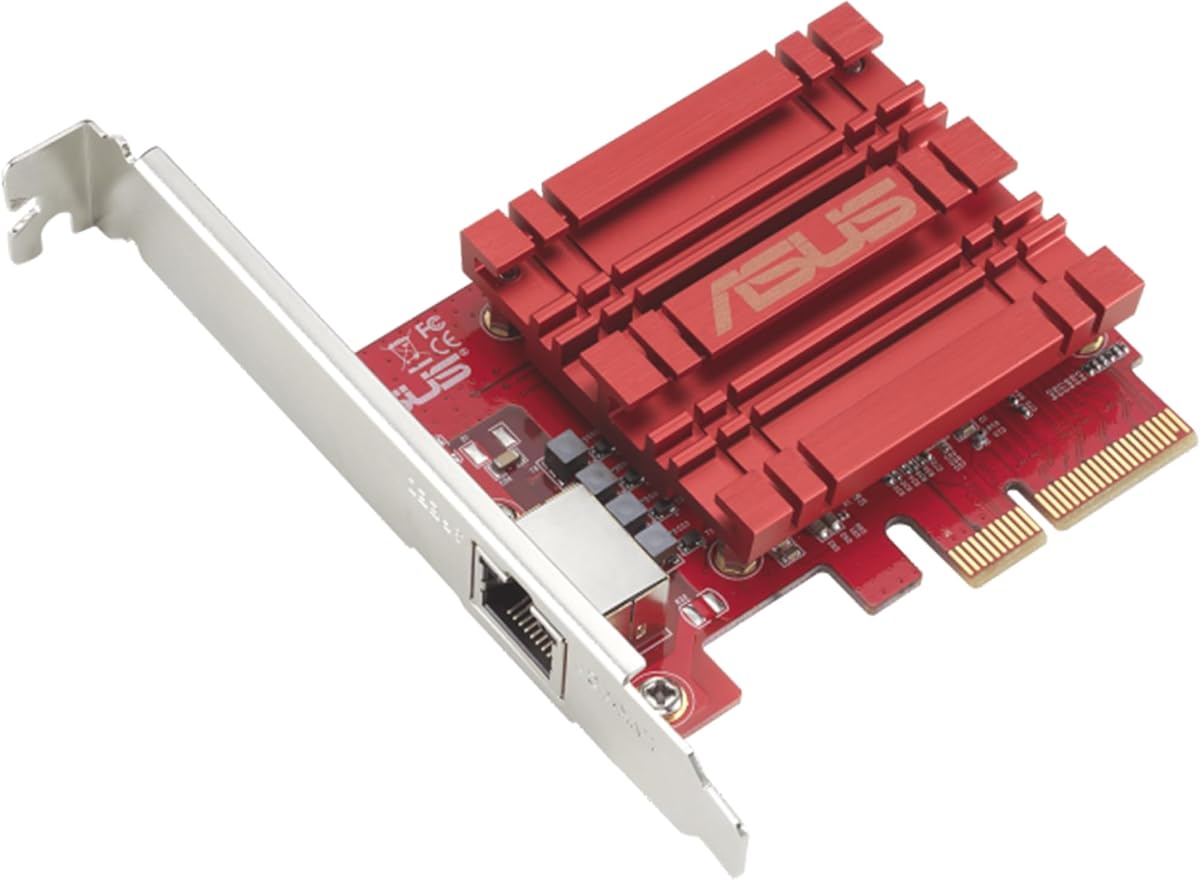
This Asus network card offers straightforward 10Gbps connectivity with QoS features to manage traffic. It is designed for users who need reliable throughput for specific tasks.
We may earn a commission when you buy through this link, at no additional cost to you.
The RJ45 port allows you to use standard copper cables for connection. It handles multi-gigabit speeds well which is useful for routers supporting 5G or 2.5G.
Driver availability can be limited compared to Intel cards on some Linux distributions. Heat output may be higher so ensure your PC case has good airflow.
Asus motherboard users will appreciate the seamless integration this card offers. It provides a simple path to upgrade your desktop to 10G networking.
Built-in QoS allows you to prioritize gaming or streaming traffic to ensure smooth performance.
The RJ45 port works with existing copper cabling so you do not need to rewire your desk.
We may earn a commission when you buy through this link, at no additional cost to you.
This single port Synology adapter ensures full compatibility with Synology NAS systems. It delivers high performance for storage applications that demand reliable 10Gbps speeds.
We may earn a commission when you buy through this link, at no additional cost to you.
The adapter supports auto-negotiation which simplifies setup with mixed speed switches. It is fully validated by Synology to avoid any compatibility issues.
It is more expensive than generic cards but the warranty justifies the cost. It is the safest choice if you want zero configuration hassle.
Users looking to add one 10GbE port to their Synology NAS will find this ideal. It integrates smoothly and keeps your storage network stable.
Being validated by Synology guarantees that firmware updates will not break network functionality.
It delivers consistent speeds for storage apps ensuring your NAS remains responsive under load.
We may earn a commission when you buy through this link, at no additional cost to you.
This Intel-compatible card provides 10Gbps throughput using genuine silicon at a lower price point. It works with many modules without rejecting them for brand reasons.
We may earn a commission when you buy through this link, at no additional cost to you.
Users on Proxmox or TrueNAS will find it detected immediately without extra driver steps. It supports multiple speeds including fallback to 1Gbps for older equipment.
The passive heatsink can warm up so case airflow is important. It ships with two brackets to fit most PC cases easily.
Budget builders wanting fiber connectivity will find this card hard to beat. It balances cost and performance for NAS and server environments well.
The unlocked cage accepts various DAC cables and optics allowing you to shop for the best price.
It is detected by major Linux based OSs including Ubuntu and Debian without extra configuration.
We may earn a commission when you buy through this link, at no additional cost to you.
The TRENDnet adapter meets NDAA compliance standards for specific government projects. It provides standard 10Gbps connectivity with support for slower 2.5G and 5G links.
We may earn a commission when you buy through this link, at no additional cost to you.
Its PCIe 3.0 interface matches most modern motherboard slots for reliable performance. The card includes standard and low-profile brackets for flexible installation.
It offers solid documentation but fewer advanced features than Intel cards. Support is available during business hours for any technical questions you may have.
If you need a compliant card for restricted environments this is a strong candidate. It delivers standard 10G performance with verified specifications.
NDAA and TAA compliance make it suitable for certain government projects that require verified hardware.
It supports 2.5GBASE-T allowing use with Cat5e cables for short runs to older switches.
We may earn a commission when you buy through this link, at no additional cost to you.
This 10Gtek card uses the X550-AT2 controller for reliable 10G performance. It is an excellent choice for home users needing a single port upgrade.
We may earn a commission when you buy through this link, at no additional cost to you.
Support for 2.5G and 5G speeds allows it to connect to newer switches. It fits many systems including servers and workstations with Linux.
It does not support firmware updates so ensure your switch supports multi-gig auto-negotiation. Otherwise you may need to force speeds manually on the card.
For a single port solution that balances cost and features this card is solid. It brings Intel stability to a more affordable price point.
The X550-AT2 chip is known for stable performance in various server and desktop configurations.
Includes brackets for full height and low profile cases so it fits most desktop towers.
We may earn a commission when you buy through this link, at no additional cost to you.
Selecting the right 10GbE network card involves checking several factors to ensure compatibility and performance.
RJ45 cards use standard copper cables which are easy to install and widely available. SFP+ cards require transceivers or DAC cables but offer fiber options for longer runs.
Choose RJ45 for standard copper or SFP+ for fiber needs.
Intel controllers like X550 or 82599EN provide proven stability and wide OS support. Realtek cards offer lower prices but may have fewer driver options.
Prioritize Intel controllers for servers or Linux environments.
Check if the card has official drivers for your OS. Linux support varies by kernel version and vendor commitment.
Always verify Linux driver availability before buying.
10Gbps cards typically need PCIe x4 or higher lanes for full throughput. Some cards fit x1 slots but may not reach full speed.
Ensure your motherboard has a compatible PCIe slot.
Enterprise cards often come with longer warranties and better support. Budget options may have shorter coverage periods.
Consider warranty length for professional use cases.
Some cards auto-negotiate 5G and 2.5G speeds which is useful for mixed networks. Others are strictly 10Gbps.
Choose cards with multi-gig support for flexibility.
Low profile brackets are essential for small cases and servers. Standard brackets work for most desktop towers.
Check your PC case size before purchasing.
Some cards allow firmware updates to fix bugs. Others do not support this feature.
Opt for cards with firmware update tools if possible.
Install the card in a supported PCIe slot using the included brackets. Secure it properly with a screw and attach the cable firmly.
Download drivers from the manufacturer website before installing the hardware. Reboot your system once drivers are installed to ensure stability.
Monitor the card temperature using system tools. Clean dust from slots annually to maintain airflow and prevent overheating.
You should use Cat6A cables for full 10G speeds over copper. Cat6 can work for shorter distances but Cat6A ensures reliability and performance.
Your router must support 10Gbps or multi-gigabit speeds to utilize the card. Otherwise it will fall back to 1Gbps speeds.
Yes these cards are ideal for NAS to increase file transfer speeds. Ensure your NAS OS supports the specific card controller.
RJ45 uses copper cables while SFP+ uses fiber optics or DAC cables. SFP+ is better for longer distances and reduced interference.
Many cards support Linux but driver availability varies. Intel cards generally have better open source support than some third-party models.
Open your PC case insert the card in a PCIe slot and secure it. Install drivers and reboot. Verify network settings in your OS.
20GbE requires different hardware and switches. You will need to replace the card to move from 10GbE to higher speeds.
Yes they generate heat especially under load. Ensure your case has good airflow to cool the card and other components.
The best pick depends on your needs but TP-Link and Vogzone offer great value. Synology users should stick with official adapters for seamless integration.
Prioritize controller quality and OS support when making your final decision. This ensures stable performance for your workstation or server tasks.
Always check current availability and pricing as these change frequently. Use the comparison table to find the exact model that fits your budget.