
Zoom H1 XLR 2-Channel Recorder
4.5Editor score
Two XLR/TRS inputs
Compact handheld design
OLED waveform display
This guide compares the top audio field recorders for film production, evaluating features like timecode, input channels, and recording quality for filmmakers.
Capturing pristine audio is just as critical as shooting high-quality video in modern filmmaking. Field recorders provide the control and fidelity needed to ensure dialogue and sound effects are crisp, clear, and free from distortion during production.
We analyzed ten leading models based on their input flexibility, recording formats, timecode capabilities, and overall reliability. Each product was evaluated for its suitability in professional sets, run-and-gun scenarios, and independent production environments.
Each pick highlights specific strengths and ideal use cases to help you find the right tool for your workflow. Please note that product availability and pricing can change frequently, so verify details before purchasing.
4.5Editor score

4.7Editor score
4.6Editor score
The following table provides a side-by-side comparison of all ten selected audio field recorders to help you evaluate their specifications and capabilities at a glance.



The Zoom F6 Professional Field Recorder stands out as a top-tier device for filmmakers who demand reliability and quality in their audio capture. With a robust rating of 4.7 stars, it has earned the trust of professionals who need to record complex audio scenarios without compromise.
We may earn a commission when you buy through this link, at no additional cost to you.
Its standout feature is the 32-bit float recording capability combined with dual AD converters, which allows it to capture a massive dynamic range. This means you can record everything from whisper-quiet dialogue to explosive sound effects without worrying about clipping or distortion, ensuring no critical take is lost.
While the price point is higher than entry-level models, the six XLR inputs and support for up to 14 tracks provide significant production flexibility. The rugged construction ensures it can handle location work, and the timecode I/O keeps audio perfectly synced with video for seamless post-production.
If you are working on professional film sets or demanding field recordings where audio quality is paramount, the Zoom F6 is an excellent investment. Its combination of input flexibility, recording safety, and portability makes it a reliable companion for serious audio professionals.
The 32-bit float technology ensures that you never have to worry about setting gain levels incorrectly during a take.
Timecode I/O is essential for multi-camera shoots where audio must align perfectly with video frames in post.
We may earn a commission when you buy through this link, at no additional cost to you.
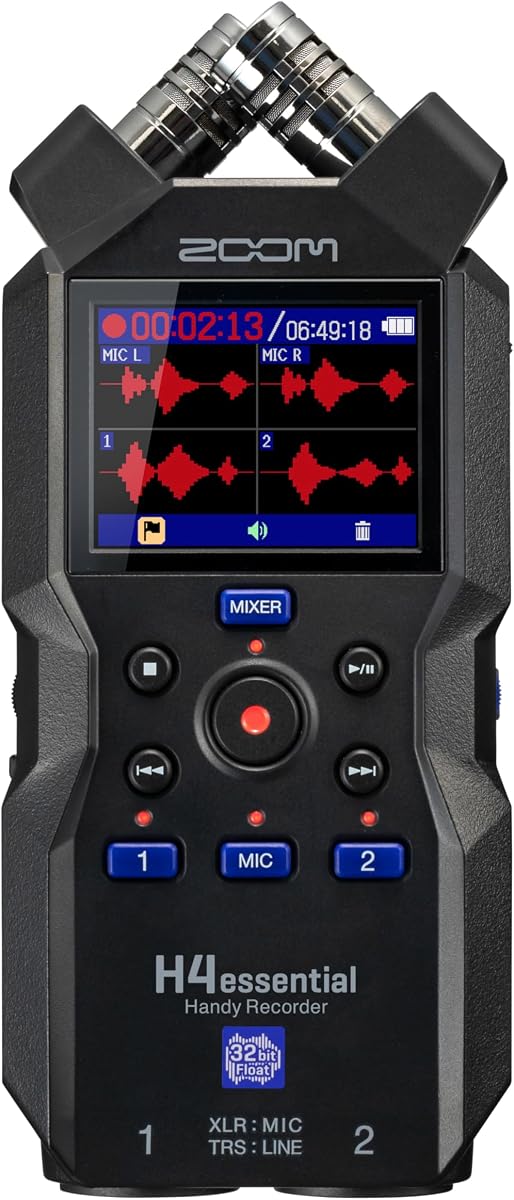
The Zoom H4 Essential Handheld Recorder is designed for creators who need a versatile tool without the complexity of higher-end units. It holds a solid rating of 4.4 stars and is particularly useful for independent filmmakers, podcasters, and musicians.
We may earn a commission when you buy through this link, at no additional cost to you.
Its key strength lies in its ability to capture multiple sources simultaneously with its 4-track recording capability. You can use the built-in stereo microphones or connect external mics via XLR/TRS inputs, giving you flexibility for interviews, live performances, and video audio.
The device also offers USB-C connectivity, allowing you to record directly to your phone or computer while simultaneously saving a backup to an SD card. The spoken menu guidance makes it easier to navigate for users of all experience levels.
For independent filmmakers and content creators looking for a balance of features and ease of use, the Zoom H4 Essential is a strong choice. It provides reliable performance for projects that do not require the extensive channel count of professional units.
Recording four tracks gives you the freedom to separate dialogue and ambient sounds during editing.
USB-C support enables seamless streaming and recording workflows with modern mobile devices.
We may earn a commission when you buy through this link, at no additional cost to you.
The Zoom H1 XLR 2-Channel Recorder brings professional-quality recording to filmmakers on a budget. With a rating of 4.5 stars, it is an excellent entry point for those needing high-quality audio without a high price tag.
We may earn a commission when you buy through this link, at no additional cost to you.
It features two XLR/TRS inputs that allow you to connect external microphones and instruments directly. This is a significant upgrade over standard recorders, providing the flexibility to use professional audio gear while maintaining a simple, user-friendly interface.
The OLED waveform display ensures you can always see your levels at a glance, which is crucial for avoiding clipping during critical recordings. It supports SDXC cards up to 1TB, giving you ample storage for extended sessions.
For solo filmmakers, journalists, and content creators, this recorder offers a reliable and affordable solution. It ensures that even on tight budgets, the audio quality remains crisp and detailed, enhancing the overall production value.
Having two professional inputs allows for recording a boom mic and a lavalier simultaneously.
The OLED screen provides immediate visual feedback on audio levels without needing a separate monitor.
We may earn a commission when you buy through this link, at no additional cost to you.
The Zoom F3 Professional Field Recorder is built for the fast-paced world of run-and-gun filmmaking. It holds a rating of 4.6 stars and is trusted by professionals for its ability to capture clean audio in unpredictable environments.
We may earn a commission when you buy through this link, at no additional cost to you.
Its 32-bit float recording allows you to capture everything from quiet dialogue to sudden peaks without stopping to adjust levels. The ultra-low-noise preamps ensure consistent audio quality even in challenging conditions where control might be limited.
The dual locking XLR inputs keep connections secure when the recorder is mounted out of reach, which is vital for complex rigs. Flexible power options and USB workflows keep you recording without interruption during long days on set.
For filmmakers who need a reliable, portable solution that fits into any workflow, the Zoom F3 is highly recommended. It balances professional features with a compact form factor that does not burden the production.
Float recording eliminates the fear of clipping, allowing for consistent audio in dynamic scenes.
Locking XLR inputs prevent cables from falling out during active movement or rough handling.
We may earn a commission when you buy through this link, at no additional cost to you.
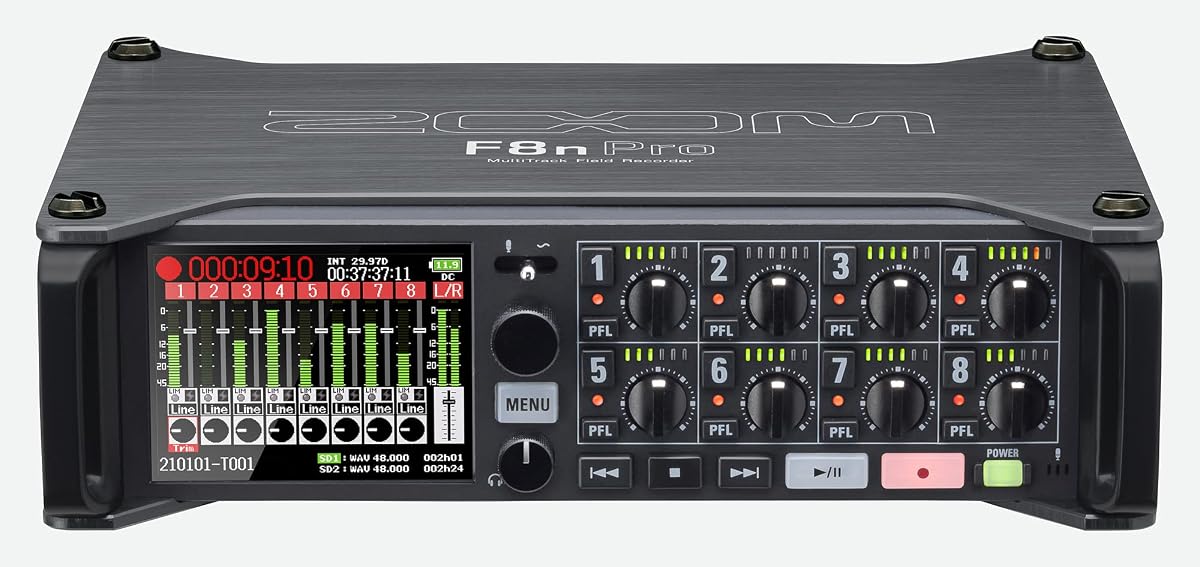
The Zoom F8n Pro Field Recorder is a powerhouse for professional film and field audio production. With a rating of 4.6 stars, it offers an 8-channel, 10-track capability that supports complex setups requiring multiple microphones.
We may earn a commission when you buy through this link, at no additional cost to you.
Its preamps provide 75dB of gain with a -127dBu EIN, ensuring pristine audio even for quiet dialogue or loud action sequences. The dual SD card slots allow for redundant recording, providing a safety net against card failure during critical shots.
Industry-leading timecode accuracy ensures your tracks align perfectly with picture, while the device can also function as a USB audio interface during recording. This flexibility makes it a complete solution for high-end productions.
For larger crews and professional filmmakers who need maximum control and redundancy, the Zoom F8n Pro is an ideal choice. It ensures that no audio is lost and that every element of the mix can be handled with precision.
Dual SD slots mean you record to two cards simultaneously, protecting against data loss.
High gain preamps allow you to capture distant mics without introducing excessive noise.
We may earn a commission when you buy through this link, at no additional cost to you.
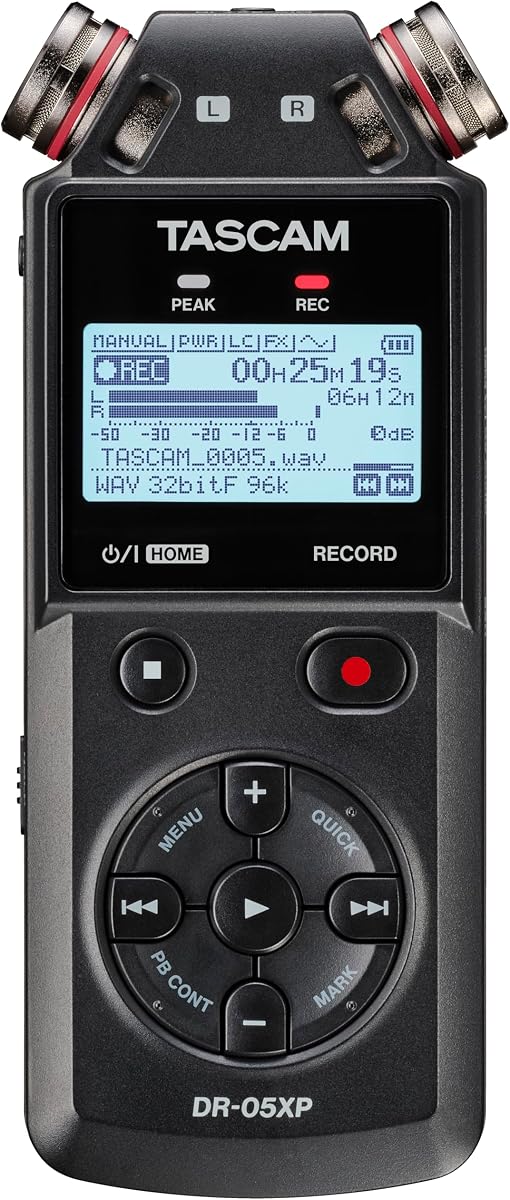
The TASCAM DR-05XP is a portable handheld recorder that excels in capturing music, video audio, and sound design elements. With a rating of 4.2 stars, it is designed for users who need high-quality recording in a small form factor.
We may earn a commission when you buy through this link, at no additional cost to you.
It supports 32-bit float recording, which provides safety against clipping, and its omnidirectional condenser microphones handle loud environments up to 125dB SPL. This makes it suitable for capturing intense sound effects or live performances.
The 2-in/2-out USB-C interface allows direct recording to your computer, and it can operate for up to 17.5 hours on batteries. This longevity is beneficial for long recording sessions or travel where power outlets might be scarce.
For content creators, sound designers, and journalists, the DR-05XP offers reliable and portable audio capture. It simplifies the process of capturing clear, professional audio on the go without sacrificing quality.
The microphones can handle high sound pressure levels without distortion during loud events.
Extended battery life allows for all-day recording sessions without needing frequent changes.
We may earn a commission when you buy through this link, at no additional cost to you.
The Zoom H5 4-Track Handheld Recorder is renowned for its interchangeable input capsule system that allows for versatile recording configurations. With a rating of 4.7 stars, it has been a favorite among musicians and filmmakers for its adaptability.
We may earn a commission when you buy through this link, at no additional cost to you.
It includes a detachable X/Y capsule with shock-mounted mics that reduce handling noise. The four-track simultaneous recording allows you to capture multiple audio sources, while the two mic/line inputs with XLR/TRS combo connectors offer additional flexibility.
The safety net feature protects your recordings by saving a backup at a lower gain, ensuring you never miss a critical take. While it has some limitations like a 32GB SD card limit, its core functionality remains robust.
For those who value modular design and proven reliability, the Zoom H5 is an excellent choice. It provides a balance of features that suit a wide range of audio recording needs, from interviews to music sessions.
Swapping capsules lets you change the pickup pattern to suit different recording environments.
This feature ensures you have a backup track even if the primary recording is too loud.
We may earn a commission when you buy through this link, at no additional cost to you.
The TASCAM DR-10L Pro Field Recorder is designed for discreet and personal audio capture with exceptional quality. With a rating of 4.4 stars, it is ideal for filmmakers who need to record lavalier audio without a bulky setup.
We may earn a commission when you buy through this link, at no additional cost to you.
It features 32-bit float recording, which captures everything from whispers to screams without distortion. The included TM-10L clip-on lavalier microphone is perfectly matched to the unit, ensuring clear audio even in busy settings like weddings or events.
The firmware update supports LTC Jam Sync for seamless timecode synchronization, which is vital for multi-device setups. It supports high-capacity microSDXC cards, providing practically limitless storage for long projects.
For journalists, wedding videographers, and content creators, this recorder offers a stealthy and high-quality solution. It ensures that personal audio is captured clearly and accurately without drawing attention during the shoot.
The small form factor allows the recorder to be hidden on a subject during interviews.
LTC Jam Sync ensures your audio aligns perfectly with the camera or other recorders.
We may earn a commission when you buy through this link, at no additional cost to you.
The Zoom H1 Essential Recorder is designed for musicians, podcasters, and content creators who need better sound than a phone alone. With a rating of 4.0 stars, it is perfect for those starting out in video production or podcasting.
We may earn a commission when you buy through this link, at no additional cost to you.
It captures clear stereo audio for videos, reels, and tutorials, and its USB-C connection allows you to use it as a microphone for livestreams or calls. This connectivity makes it a versatile tool for both recording and live use.
The unit is simple to operate, allowing you to capture real-world sound like ambience and nature easily. It supports songwriting sessions and rehearsals, ensuring detailed sound is captured in the moment.
For creators looking to upgrade their audio setup without a steep learning curve, this recorder is a great starting point. It offers polished sound quality that improves the overall professionalism of your content.
USB-C streaming enables direct connection to computers for live voiceovers or calls.
Stereo microphones capture a wide soundstage suitable for interviews and ambient recordings.
We may earn a commission when you buy through this link, at no additional cost to you.
The Zoom F2 Lavalier Recorder is the smallest 32-bit float recorder you can wear, designed for discreet and reliable audio capture. With a rating of 4.0 stars, it is perfect for filmmakers and content creators who need to attach a recorder to a subject.
We may earn a commission when you buy through this link, at no additional cost to you.
It comes with an omnidirectional lavalier microphone and offers clip-free audio at any volume level. The internal clock ensures perfect audio and video sync, while the REC Hold switch prevents accidental stops during critical recordings.
Running on just two AAA batteries for up to fifteen hours, it is highly power-efficient. It supports microSD cards up to 512GB, providing ample storage for long shoots and extended field sessions.
For vloggers, journalists, and videographers, the Zoom F2 offers a simple and effective solution for capturing high-quality lavalier audio. It ensures that no critical dialogue is missed due to clipping or timing issues.
The internal clock accuracy ensures your audio matches the video frames precisely.
High efficiency allows for long recording sessions without needing frequent battery changes.
We may earn a commission when you buy through this link, at no additional cost to you.
Choosing the right audio field recorder requires understanding your specific needs, budget, and technical requirements. Here are the key factors to consider.
The number of XLR inputs determines how many microphones you can connect simultaneously. For solo shoots, two inputs may suffice, but larger productions require four to eight channels to capture boom mics, lavaliers, and ambient sounds independently.
Match the input count to your typical production size to avoid bottlenecks during recording.
Modern recorders often support 32-bit float recording, which provides a wide dynamic range and prevents clipping. Traditional formats use 24-bit fixed bit depth, which requires careful gain staging but is still widely used in professional workflows.
Prioritize 32-bit float if you want safety against clipping in unpredictable environments.
Timecode ensures that your audio files stay synchronized with video footage during editing. Look for recorders with timecode in/out ports if you plan to work with multiple cameras or complex post-production workflows.
Timecode support is essential for professional projects where sync errors can be costly.
Field recorders come in various sizes from compact handheld units to rugged box-style devices. Consider the size and weight based on whether you need to carry it in a backpack or mount it on a camera rig.
Choose a size that fits comfortably in your existing gear setup without adding excessive weight.
High-quality preamps ensure that your audio is clean and free from hiss or interference. Look for specifications like low equivalent input noise (EIN) to ensure your recordings sound professional even at high gains.
Low noise floor preamps are critical when recording quiet dialogue in noisy locations.
Long recording sessions require reliable power sources. Check how long the recorder runs on batteries and whether it supports external power or USB charging to keep recording without interruption.
Prioritize units with long battery life or flexible power options for location shoots.
High-quality audio files consume significant storage space. Ensure the recorder supports SDXC or microSDXC cards with high capacity to avoid running out of space during long takes.
Verify media compatibility to ensure you can store all your necessary recordings.
Field recorders are often used in harsh environments. Look for rugged construction, durable materials, and reliable locking connectors that can withstand the demands of location work.
A durable build ensures the equipment survives travel and active shooting conditions.
Always start by checking your battery levels and ensuring your storage cards are formatted correctly for the device. Insert fresh batteries or charge the unit fully to avoid interruptions during critical moments on set.
Connect your microphones securely using the appropriate XLR cables and check your audio levels on the waveform display. If your device supports it, engage timecode sync with your camera to simplify the editing process later.
After your shoot, back up your files to a hard drive immediately and clean the unit before storing it away. Use a protective case to prevent dust and damage, and periodically check firmware updates to keep the recorder running smoothly.
32-bit float recording allows for a massive dynamic range, capturing both very quiet and very loud sounds without distortion. This technology eliminates the need to set gain levels precisely before recording.
Timecode ensures that audio and video remain synchronized during the editing process. Without it, syncing multiple cameras and microphones can be extremely time-consuming and prone to errors.
For a basic shoot, two inputs are usually sufficient to connect a boom microphone and a lavalier. However, larger productions may require more inputs to capture multiple sources simultaneously.
Most recorders run on standard AA or AAA batteries which you usually need to purchase separately. Some models may include them, but you should always carry spares for long recording sessions.
Use high-speed SDXC or microSDXC cards with sufficient capacity to handle large audio files. Check your recorder's manual for specific speed class requirements to ensure reliable recording.
Many modern field recorders can function as USB audio interfaces, allowing you to record directly into your computer. This is useful for podcasting or streaming without needing extra equipment.
The Zoom F6 and Zoom F8n Pro stand out for their professional input counts and recording features. For those on a budget, the Zoom H1 XLR offers exceptional value with essential XLR inputs and solid performance.
When choosing a recorder, prioritize features that align with your specific workflow. Whether you need robust timecode for complex shoots or simple portability for independent work, there is a model that fits your needs.
Remember that prices and availability can change frequently. Always verify the latest details and read current user reviews before making your final purchase decision.