
HiFi DAC Audio Sound Card Module PCM5122 I2S Interface
4.8Editor score
PCM5122 DAC chip support
LED indicators for status
I2S interface connectivity
Explore the top DAC for Raspberry Pi options for high-res audio. This guide compares ten models by chip quality, compatibility, and sound performance.
Upgrading the audio output of your Raspberry Pi requires a dedicated Digital to Analog Converter for true fidelity. These boards replace the weak onboard audio with precise circuitry designed for high-resolution playback.
We evaluated ten distinct models ranging from budget-friendly modules to premium Hi-Fi solutions. Each option was assessed on chip architecture, software compatibility, and build quality to ensure reliable performance.
Our detailed reviews highlight the unique strengths of every unit in this lineup. Please note that availability and pricing may vary over time as manufacturers update their product lines regularly.
4.8Editor score
4.5Editor score

4.5Editor score
This side-by-side comparison highlights the technical specifications and unique capabilities of each DAC model to help you find the perfect audio upgrade.


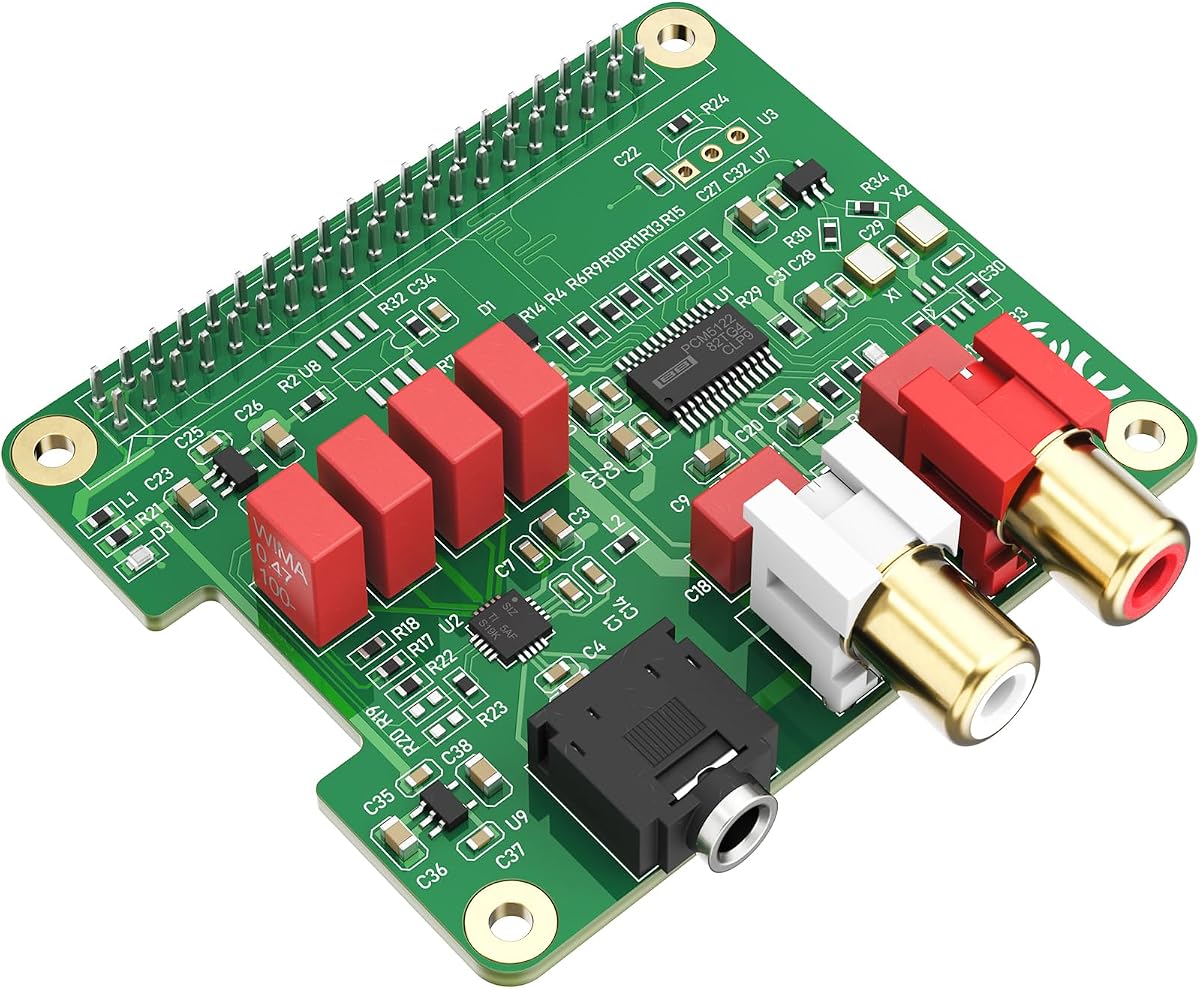
This HiFi DAC HAT stands out as the premier choice for Raspberry Pi audio upgrades. With a high rating and robust engineering, it delivers studio-grade sound at a fraction of the cost of traditional gear.
We may earn a commission when you buy through this link, at no additional cost to you.
The PCM5122 DAC chip paired with dual oscillators ensures timing accuracy and purity. Independent grounding and film capacitors further refine the signal path for RCA and headphone outputs.
While the headphone amplifier is decent, it lacks the power of dedicated external amps. The GPIO requirement also limits use on boards without exposed headers or specific cases.
Audiophiles and DIY enthusiasts will find this board offers the best balance of performance and versatility. It is the recommended starting point for serious music streaming on Pi.
Dual ultra-low jitter oscillators eliminate timing errors that often degrade digital audio on standard single-board computers.
Extensive testing with Volumio and Moode ensures seamless integration without complex driver installations for most users.
We may earn a commission when you buy through this link, at no additional cost to you.
The DAC Mini Hat offers exceptional value for builders working with smaller form factors like the Zero 2. Its compact profile ensures it fits snugly without overhanging the board.
We may earn a commission when you buy through this link, at no additional cost to you.
Despite its small size, it maintains high fidelity with a PCM5122 DAC and TPA6133 amplifier. This combo provides clean power to headphones and low noise for line outputs.
Build quality is functional rather than premium, which means it may lack the shielding of more expensive units. It also relies on standard GPIO pins which may need spacers.
For budget-conscious users or Zero-specific projects, this board delivers audiophile-grade sound quality that rivals far more expensive standalone devices today.
Specifically tailored for Zero boards, this hat prevents physical interference while maintaining full compatibility with standard GPIO headers.
The included amplifier provides enough voltage swing to drive high impedance headphones clearly without external amplification hardware.
We may earn a commission when you buy through this link, at no additional cost to you.
The HiFi DAC Pro Hat is the undisputed champion for those seeking ultimate audio performance. Its flagship chip delivers unmatched detail and dynamic range for critical listening sessions.
We may earn a commission when you buy through this link, at no additional cost to you.
Support for DSD512 and high sampling rates ensures no compromise on high-resolution files. The balanced output option provides professional connectivity for studio monitors and gear.
The higher cost reflects the advanced components and engineering involved. Users may also need to consider a case or enclosure to protect the board during transport.
For audiophiles demanding bit-perfect sound, this board is the definitive upgrade. It turns the Raspberry Pi into a genuine high-end media player.
The ES9038Q2M converter provides industry-leading specifications that ensure pristine audio quality across all frequencies and dynamics.
Balanced outputs reduce noise interference significantly, delivering cleaner sound for professional audio equipment setups.
We may earn a commission when you buy through this link, at no additional cost to you.
The Digi One Hat serves a unique role by focusing purely on digital audio transmission. It is ideal for users who have a high-quality external DAC unit.
We may earn a commission when you buy through this link, at no additional cost to you.
Its galvanic isolation blocks ground loops and electrical noise from the Raspberry Pi. This ensures the cleanest possible digital signal reaches your external receiver or amp.
Since it does not convert to analog, it is not a standalone solution for speakers or headphones. You must pair it with another DAC to hear sound.
This board is essential for high-end audio builds where the Raspberry Pi serves strictly as a transport device for digital signals.
Power and digital signal isolation prevent electrical noise from degrading the signal sent to high-fidelity external audio systems.
Perfect for streamers who use high-end DACs, this hat ensures data integrity through the optical connection without internal noise.
We may earn a commission when you buy through this link, at no additional cost to you.
This module provides a straightforward path to improving audio quality without complex setups. Its LED indicators give immediate visual feedback on power and operation status.
We may earn a commission when you buy through this link, at no additional cost to you.
The PCM5122 chip ensures high resolution playback up to 32-bit depth. It is perfect for users who just need a reliable analog output from their Pi.
It lacks a built-in headphone amplifier so you will need an external amp for direct listening. The casing is also basic compared to full HATs.
This option is best for tinkerers who want reliable analog audio output with minimal fuss or extra components in their project.
Integrated LEDs show power and decoding status instantly, making troubleshooting and monitoring much easier during development.
Using the I2S interface ensures precise data transmission with minimal timing errors for cleaner audio reproduction.
We may earn a commission when you buy through this link, at no additional cost to you.
The RASPIAUDIO DAC Hat simplifies setup with its EEPROM chip that handles auto-boot configurations. Users do not need to manage drivers manually for it to work.
We may earn a commission when you buy through this link, at no additional cost to you.
Its universal compatibility covers models from Zero to Pi 5. This makes it a flexible choice for those who plan to swap hardware frequently.
Build quality is standard and may not stand up to rigorous handling. Documentation can be sparse so you might rely on community forums for help.
Ideal for quick projects where simplicity and immediate playback are the main priorities for your Raspberry Pi audio needs.
Onboard EEPROM stores settings so the board boots automatically without manual configuration on every Raspberry Pi OS reboot.
Supports a broad range of Raspberry Pi models ensuring you can move this hat between different boards easily.
We may earn a commission when you buy through this link, at no additional cost to you.
This board is a perfect companion for the Raspberry Pi 5. It is engineered to fit securely while providing essential audio enhancements immediately.
We may earn a commission when you buy through this link, at no additional cost to you.
The included ground loop isolator is a standout feature that prevents electrical hum. This makes it ideal for environments with noisy power sources.
It is limited to the Pi 5 so it is not a future-proof choice for older boards. Features are basic compared to full high fidelity units.
For Pi 5 owners needing immediate audio relief without complex setups, this is an excellent plug and play solution today.
A built-in isolator removes the annoying hum that can plague audio when the Pi shares power with other devices.
Tailored specifically for the Pi 5 layout this board ensures a secure fit without interfering with ports or cases.
We may earn a commission when you buy through this link, at no additional cost to you.
The HiFiBerry DAC+ DSP is built for users who need onboard signal processing. Its digital capabilities allow for room correction and mixing without software overhead.
We may earn a commission when you buy through this link, at no additional cost to you.
It supports digital inputs and outputs which makes it versatile for complex audio routing. You can even run it standalone without a Pi for specific tasks.
The cost is higher than standard DACs and it requires specific enclosures for mounting. This limits flexibility if you use custom cases or setups.
Perfect for professional audio setups needing DSP features this board turns your Pi into a powerful audio processing station.
The onboard DSP runs commands per sample to adjust sound levels or correct room acoustics in real time.
Can run independently of a Raspberry Pi board making it useful for fixed installations or digital mixers.
We may earn a commission when you buy through this link, at no additional cost to you.
The HiFiBerry Digi+ focuses on transmitting bit-perfect digital signals. It is designed for users who prioritize data integrity above all else in their stream.
We may earn a commission when you buy through this link, at no additional cost to you.
It supports high resolution rates and offers both optical and coaxial connections. This flexibility allows you to match your external amplifier or receiver.
It is often optimized for older Pi models which may be limiting for newer hardware. It also does not provide analog output directly.
Best for transport-only use cases where you need clean digital output to an external DAC without internal processing noise.
Supports both Toslink and Coaxial connectors giving you the flexibility to choose the best physical connection for your setup.
Data passes through without modification ensuring the original audio quality is preserved exactly as intended.
We may earn a commission when you buy through this link, at no additional cost to you.
This module is an accessible entry point for Raspberry Pi audio projects. It offers lossless decoding at a fraction of the cost of HATs.
We may earn a commission when you buy through this link, at no additional cost to you.
The soldered stereo jack makes it easy to connect headphones directly without extra wiring. It handles I2S data efficiently for clean output.
It requires connection to the GPIO header which means extra work. There are no onboard controls so you rely on software for volume and settings.
Great for learners or tight budgets, this module proves that high-quality audio on Pi is possible without expensive components.
The stereo jack is pre-soldered which simplifies the physical assembly process for your Pi audio project.
Priced lower than other options this module delivers lossless quality making high fidelity accessible to everyone.
We may earn a commission when you buy through this link, at no additional cost to you.
Choosing the right DAC depends on your specific hardware, output needs, and desired sound quality.
The core chip determines sound quality and resolution. Look for reputable chips like the ESS ES9038Q2M or TI PCM5122 which offer excellent dynamic range and low noise floors for Hi-Fi music playback.
A high-quality DAC chip is essential for avoiding the noise and distortion inherent in the Raspberry Pi's onboard audio circuitry.
Ensure the board fits your specific Pi model. Some HATs are optimized for the Zero series while others are designed for the Pi 5 or 4. Check the physical dimensions and header alignment before purchasing.
Proper physical fit prevents short circuits and ensures stable mounting within your project case or enclosure.
Decide if you need RCA line outputs or a 3.5mm headphone jack. Some boards offer both while others focus on balanced XLR outputs for professional audio gear. The right choice depends on your speakers or amp.
Matching the output type to your audio chain ensures optimal signal transfer and prevents impedance mismatches.
Timing jitter can introduce subtle artifacts in audio. Boards with independent oscillators or I2S master modes provide more accurate sample rates than those relying on the Pi's internal clock.
Investing in a board with low-jitter clocking ensures cleaner sound and better reproduction of high-resolution audio files.
Some boards act as digital transports sending S/PDIF signals to external DACs while others convert to analog directly. Digital outputs are better for high-end systems while analog is simpler for home speakers.
Choose analog if you want a complete system and digital if you already own a standalone DAC component for your audio setup.
Check if the board works seamlessly with your preferred OS like Volumio or Moode. Driverless boards with EEPROM are easier to set up. Avoid units that require complex command-line configuration.
Strong software compatibility means you spend less time configuring drivers and more time enjoying your music library.
Some boards draw significant power from the Pi which may require a high-quality supply to avoid noise. Others include power regulators or isolation to protect the signal path from electrical interference.
Ensure your power supply is robust enough to handle both the Pi and the DAC load for stable operation.
Gold-plated connectors and film capacitors suggest better durability and sound quality. Look for solid PCB designs with proper grounding schemes to avoid ground loops or hum during playback.
High build quality ensures the board survives regular handling and delivers consistent performance over the long term.
Begin by mounting the DAC HAT onto the GPIO header of your Raspberry Pi. Ensure the pins align perfectly to avoid bending them or causing a short circuit before booting the system.
Install your preferred media player software like Volumio or Moode. These systems often detect the HAT automatically so you may only need to select the audio output in settings to enable it.
Keep the board clean and dry. If you use it in a case ensure airflow is not blocked since some DACs generate heat during prolonged high-resolution audio playback sessions.
Most modern DAC HATs are plug-and-play and do not require soldering. They connect directly to the GPIO pins. Some older modules might need jumper wires so always check the product description before buying.
The onboard audio of the Raspberry Pi is basic and prone to noise. A dedicated DAC chip provides cleaner conversion and better filtering. This results in clearer sound with higher fidelity and less static.
Yes but you must choose a compact model designed for the Zero. Larger boards might overhang or block ports. Look for specific Zero-compatible HATs to ensure a perfect fit for your build.
If you are streaming via Bluetooth the DAC inside the receiving device handles the conversion. Using a DAC on the Pi is mainly for wired speakers or high-end headphones directly connected to the Pi.
Most high-quality DAC HATs support 32-bit/384kHz and DSD formats. Check the specs to confirm it handles the file types you plan to stream. This ensures you get the best quality from your library.
A HAT is a board designed to stack directly on the GPIO pins using the standard form factor. A module usually requires external connections via wires or cables which is less integrated and more DIY focused.
We have reviewed ten distinct DAC options ranging from budget modules to premium Hi-Fi solutions. Each offers unique strengths in chip quality or software compatibility to suit different project requirements.
Prioritize compatibility with your Pi model and desired output type when making your final selection. A good DAC will transform your Pi into a capable audio player for any room.
Remember to check current availability and pricing before purchasing as models may change over time. We hope this guide helps you find the perfect audio upgrade for your setup.