
STEM Electric Circuit Kit
4.5Editor score
8 circuit experiments included
Detailed circuit book provided
Promotes critical thinking skills
This guide compares the top electricity learning kits for students and educators, evaluating project variety, safety, and educational depth to help you choose
Electricity learning kits provide hands-on opportunities for students to explore fundamental concepts in physics and engineering. These tools transform abstract theories into tangible experiences, fostering curiosity and deep understanding through interactive experimentation and building activities.
We evaluated each kit based on project variety, component quality, safety features, and educational value. Our analysis covers options for various age groups and skill levels, ensuring you find a set that aligns with specific learning goals and classroom requirements.
Each selection highlights unique strengths, from basic circuit building to advanced electromagnetism experiments. Prices and availability may change over time, so check current listings for the most up-to-date information before making your final purchase decision.
4.5Editor score

4.7Editor score

4.5Editor score
The following table provides a side-by-side comparison of all ten selected kits, highlighting key specifications such as project counts, target age ranges, and unique components to help you make an informed decision.



The National Geographic Circuit Kit stands out as the top choice with over 120 projects for kids. It features a robust set of components designed for safety and ease of use. The inclusion of video instructions via QR codes makes learning accessible for all skill levels.
We may earn a commission when you buy through this link, at no additional cost to you.
This kit excels in engagement, allowing children to build a sound system, fly a copter, and create light shows. The components connect easily without tools, ensuring a solid connection for every project. The storage organization is excellent, keeping all parts secure and accessible.
While the kit is comprehensive, it does require purchasing batteries separately, which is a common oversight. The storage case is somewhat large, so space planning is needed. These are minor trade-offs given the sheer volume of educational content provided.
Ideal for families seeking a long-term STEM investment, this kit keeps kids occupied for hours. It fosters creativity and technical understanding effectively. We recommend it as the premier option for introducing electricity concepts to curious minds.
With 120+ activities, children can explore diverse electrical phenomena without needing additional kits.
Components are designed for complete safety, ensuring a worry-free learning environment for young students.
We may earn a commission when you buy through this link, at no additional cost to you.
This kit offers an accessible entry point into electrical engineering for young learners. It includes eight engaging experiments that teach fundamental concepts like series and parallel circuits. The detailed circuit book ensures guided learning without confusion.
We may earn a commission when you buy through this link, at no additional cost to you.
The kit encourages creativity through projects like saltwater power generation and fruit batteries. It is designed to promote critical thinking and problem-solving skills effectively. The instructions are clear, making it ideal for home or classroom use.
The limited number of experiments might feel restrictive for advanced users seeking variety. Additionally, batteries are required but not included, which can delay immediate use. However, the cost efficiency outweighs these drawbacks for beginners.
Perfect for parents looking for a low-cost STEM introduction, this kit delivers high value. It teaches basic electrical concepts in an engaging way. We recommend it for budget-conscious buyers who prioritize foundational learning.
The included circuit book provides step-by-step instructions that simplify complex electrical concepts for teens.
Projects like fruit batteries and saltwater generation show diverse energy sources in action.
We may earn a commission when you buy through this link, at no additional cost to you.
Designed for high school students, this kit dives deep into physics and circuit theory. It includes 55 items specifically for electricity, plus components for magnetism. The manual explains not just how, but why experiments work, deepening understanding.
We may earn a commission when you buy through this link, at no additional cost to you.
Unique items like a sensitive ammeter and a magnetically controlled switch elevate the learning experience. The sturdy double-layer storage box ensures all components remain organized and portable for school projects. It is ideal for serious students.
The cost is higher than basic kits, reflecting the premium components included. Battery requirements need preparation before use, which might delay setup. However, the educational depth justifies the investment for advanced learners.
This kit is perfect for students aiming to master electromagnetism and circuit analysis. It bridges the gap between textbook theory and practical application. We recommend it for high school curriculums and dedicated hobbyists.
Includes specialized tools like ammeters and switches that are rarely found in standard beginner kits.
The double-layer storage box makes transport easy, allowing students to take projects to friends or school.
We may earn a commission when you buy through this link, at no additional cost to you.
This kit provides a solid foundation in both electricity and magnetism concepts. It includes 56 items for electricity and 21 for magnetism, offering a broad scope of study. The full-color manuals help students visualize complex principles effectively.
We may earn a commission when you buy through this link, at no additional cost to you.
The inclusion of repair tools sets it apart, allowing students to maintain components as they experiment. Projects range from series circuits to electromagnets, covering essential STEM topics. It is well suited for grades 9 to 11.
Batteries are not included, which is a standard practice but requires extra preparation. The manual is detailed, which might overwhelm younger children without guidance. These factors are minor given the educational value offered.
Ideal for science clubs or home-schooling, this kit encourages exploration and critical thinking. It helps consolidate textbook knowledge through hands-on activities. We suggest it for middle to high school students ready for deeper study.
Combines electricity and magnetism into one cohesive unit, providing a holistic view of physics.
Includes repair tools to fix common issues, teaching responsibility and longevity of equipment.
We may earn a commission when you buy through this link, at no additional cost to you.
This bundle offers a complete introduction to electricity and magnetism for students. It includes 50 DIY experiments with unique items like a magnetic switch. The manual is well-written and clearly explains the science behind each experiment.
We may earn a commission when you buy through this link, at no additional cost to you.
All items are packaged in a solid storage case with fixed places for organization. This makes packing easy and convenient for travel or sharing with classmates. The focus on hands-on learning ensures engagement and retention.
The manual suggests that students can design their own experiments, fostering creativity. However, small parts and battery requirements necessitate adult supervision. These are standard considerations for physics kits of this nature.
Recommended for parents seeking an all-in-one solution for STEM education, this kit covers essential concepts. It encourages curiosity and provides a concrete understanding of physics. We find it a reliable choice for home learning.
Encourages students to invent new experiments beyond the manual to deepen their understanding.
The fixed-position storage case ensures no parts are lost during transport or storage.
We may earn a commission when you buy through this link, at no additional cost to you.
This kit focuses specifically on electric circuits and motor mechanics. It includes two motors and five bulbs along with propellers for various designs. The accessories are sufficient to build multiple projects easily.
We may earn a commission when you buy through this link, at no additional cost to you.
The kit is designed to inspire and encourage kids to turn ideas into reality. It is suitable for school STEM projects and general home use. The instructions are clear, ensuring safe assembly of components.
Users must note voltage restrictions to prevent overheating or heat. Heat warnings are explicit, requiring supervision during use. These safety measures are important for maintaining the longevity of the components.
Perfect for children interested in engineering and mechanics, this kit offers targeted learning. It is a cost-effective way to explore motor functions. We recommend it for focused study on mechanical electricity.
Provides specific components to understand how electric motors function and drive mechanical motion.
Multiple propellers allow for testing different designs and aerodynamic principles.
We may earn a commission when you buy through this link, at no additional cost to you.
This kit features a comprehensive set of 50 pieces including meters. It is designed for hands-on learning of circuits and physics concepts. The manual is full-color and detailed, aiding in understanding complex topics.
We may earn a commission when you buy through this link, at no additional cost to you.
It encourages family science activities with projects like fruit batteries and electric bells. The components are durable, making it suitable for repeated use. It fosters curiosity and critical thinking skills effectively.
The inclusion of measurement tools like ammeters adds a layer of technical depth. However, some components might be challenging for very young children without guidance. This is a standard trade-off for comprehensive kits.
Ideal for birthdays or school projects, this kit provides a rich educational experience. It covers a wide range of physics topics. We recommend it for families willing to engage in joint exploration.
Includes ammeters and voltmeters to teach precise scientific measurement and observation.
Designed to encourage parent-child discovery, fostering shared learning experiences.
We may earn a commission when you buy through this link, at no additional cost to you.
This kit helps students consolidate knowledge from textbooks through practical application. It focuses on basic series and parallel circuits for junior high school students. The English instructions make assembly and understanding straightforward.
We may earn a commission when you buy through this link, at no additional cost to you.
All accessories are packed in a plastic storage box for easy organization. It is ideal for science fairs and home study units. The design is safe for introductory learning of electricity principles.
The kit is basic, which means it lacks advanced components found in higher-level kits. However, this makes it perfect for consolidating fundamental concepts. It is a reliable tool for general education.
Recommended for summer camps and science clubs, this kit is effective for foundational learning. It improves hands-on ability and creativity. We suggest it for grades 7 to 9 focused on basics.
Designed to help students apply theoretical knowledge gained in class to real-world scenarios.
English language instructions simplify the process for international or diverse learners.
We may earn a commission when you buy through this link, at no additional cost to you.
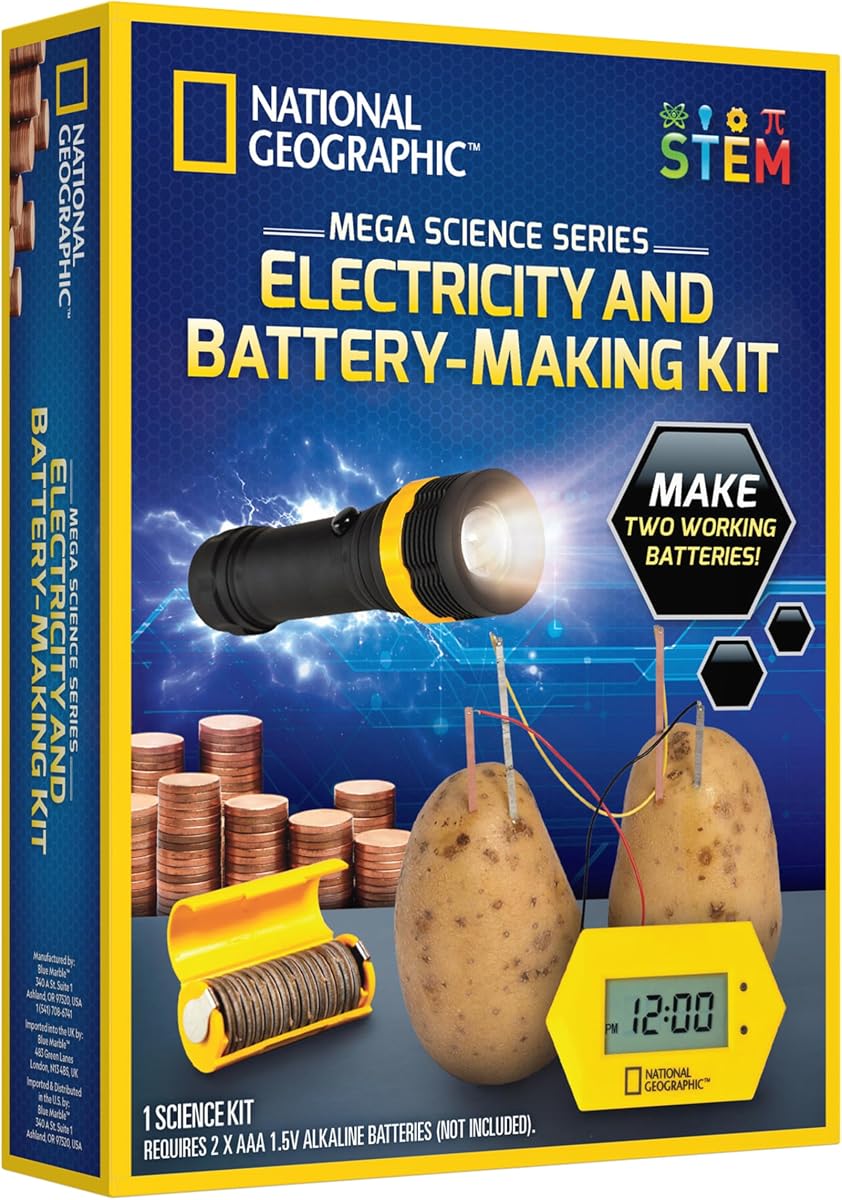
This kit teaches electricity through the unique lens of power generation. It includes two projects: a potato clock with a voltmeter and a coin-powered flashlight. The instructions are easy to follow for quick engagement.
We may earn a commission when you buy through this link, at no additional cost to you.
The learning guide provides fascinating insights into why these batteries work. It is a memorable way to learn about electrical engineering concepts. The components are simple yet effective for demonstrating principles.
The number of projects is limited to two, which restricts variety. However, the quality of instruction is high. It is a great gift for curious kids who love specific experiments.
Ideal for a focused experiment session, this kit complements broader science kits. It offers a deep dive into energy sources. We recommend it as a supplement to general electricity learning.
Specializes in how batteries and chemical reactions generate electricity.
Uses everyday items like potatoes and coins to make science relatable and fun.
We may earn a commission when you buy through this link, at no additional cost to you.
This kit builds on basic principles with an expanded set of projects. It includes a transparent box for easy access to components. The manual guides students through various experiments efficiently.
We may earn a commission when you buy through this link, at no additional cost to you.
Projects like wind power cars and traffic lights add complexity and interest. It is ready right out of the box except for batteries. The storage is convenient for teachers and students alike.
The transparent box helps in visual identification of parts quickly. However, batteries are not included, which is a standard note. It remains a solid choice for upgrading skills.
Ideal for classroom use, this kit offers flexible learning opportunities. It helps teachers demonstrate multiple concepts. We recommend it for groups seeking a balance of basics and variety.
The clear box allows users to see all contents at once for faster setup.
Adds unique projects like wind cars and traffic lights to basic circuit learning.
We may earn a commission when you buy through this link, at no additional cost to you.
Selecting the right kit involves evaluating project count, safety, and educational goals. Consider these factors to match a kit with your specific needs.
A high number of projects ensures long-term engagement. Look for kits with at least 20 to 100 experiments to keep students interested over time.
More projects mean diverse exposure to different electrical phenomena, which enhances overall learning.
Ensure the kit matches the student's maturity and skill level. Beginners need simple snap components, while advanced learners require complex tools like ammeters.
Matching the kit to the age group prevents frustration and promotes a positive learning experience.
Safety is paramount for electrical experiments. Look for insulated wires, low-voltage components, and clear warnings about heat or battery use.
Prioritize kits that emphasize safety protocols to protect users during hands-on activities.
Detailed manuals are essential for guided learning. Look for full-color books with clear diagrams and step-by-step instructions.
High-quality guides help students understand the 'why' behind experiments, not just the 'how'.
Good storage keeps components organized and prevents loss. Cases with fixed positions or clear windows are particularly useful for schools.
Proper storage ensures the kit remains usable for multiple sessions and groups.
Durable components withstand repeated use. Inspect reviews for mentions of sturdiness and longevity of parts.
Quality materials mean better results and a longer lifespan for the kit.
Check if batteries are included or separate. Most kits require AA batteries, but this is an extra cost to factor in.
Knowing requirements ahead of time prevents delays in starting experiments.
Some kits focus on motors, others on general circuits or magnetism. Choose based on specific learning goals.
Aligning the focus with curriculum needs ensures maximum relevance and value.
Start by reading the manual thoroughly to understand the layout of components and safety rules. Ensure all parts are present before beginning any experiment to avoid interruptions.
Always connect circuits properly before switching on power to prevent short circuits. Monitor the time circuits are active, as some components may heat up if left on too long.
Store all components in the provided case after use to maintain organization. Keep the kit away from moisture and extreme heat to prolong component life.
Most kits are designed for children aged 8 and older, though some target high school students. Always check the manufacturer's recommended age range to ensure the complexity is appropriate for the child's skill level.
Most electricity learning kits do not include batteries. You will typically need to purchase AA batteries separately. Always check the product description to confirm what is included in the box.
These kits are designed with safety in mind, using low voltage and insulated components. However, adult supervision is always recommended to ensure proper handling of wires and batteries.
Yes, many kits are specifically designed for classroom or club use. They include detailed manuals and organized storage, making them easy to manage for teachers and group activities.
These kits teach fundamental concepts such as series and parallel circuits, electromagnetism, and basic motor mechanics. Some advanced kits also cover measurement tools like voltmeters and ammeters.
Consider the number of projects, target age, and specific focus like magnets or motors. Higher-end kits offer more advanced components, while budget options are great for beginners.
Keep components clean and dry to maintain conductivity. Check wires regularly for any damage and replace batteries immediately after use to prevent leakage in the holders.
The National Geographic Circuit Kit stands out with its extensive project range and safety features. For budget-conscious buyers, the STEM Electric Circuit Kit offers excellent value and clear instructions.
When prioritizing advanced learning, the Physics Labs Basic Electricity Discovery provides high-quality components like ammeters. Consider the specific educational goals of your students when selecting a set.
Prices and availability change frequently, so verify the current details before purchasing. These kits offer a fantastic way to bring science to life through hands-on exploration.